
By Ann Jato | March 19, 2026
The Nigerian Correctional Service (NCoS) has partnered with Hope Behind Bars Africa (HBBA) to convene a high-level stakeholders’ dialogue aimed at optimising correctional farm centres and exploring Public-Private Partnership (PPP) pathways for inmates’ reformation.
The engagement, supported by the Rule of Law and Anti-Corruption (ROLAC) programme, brought together key actors from government, the private sector, development partners, and civil society organisations to explore sustainable strategies for strengthening correctional agriculture and enhancing rehabilitation outcomes across custodial centres nationwide.
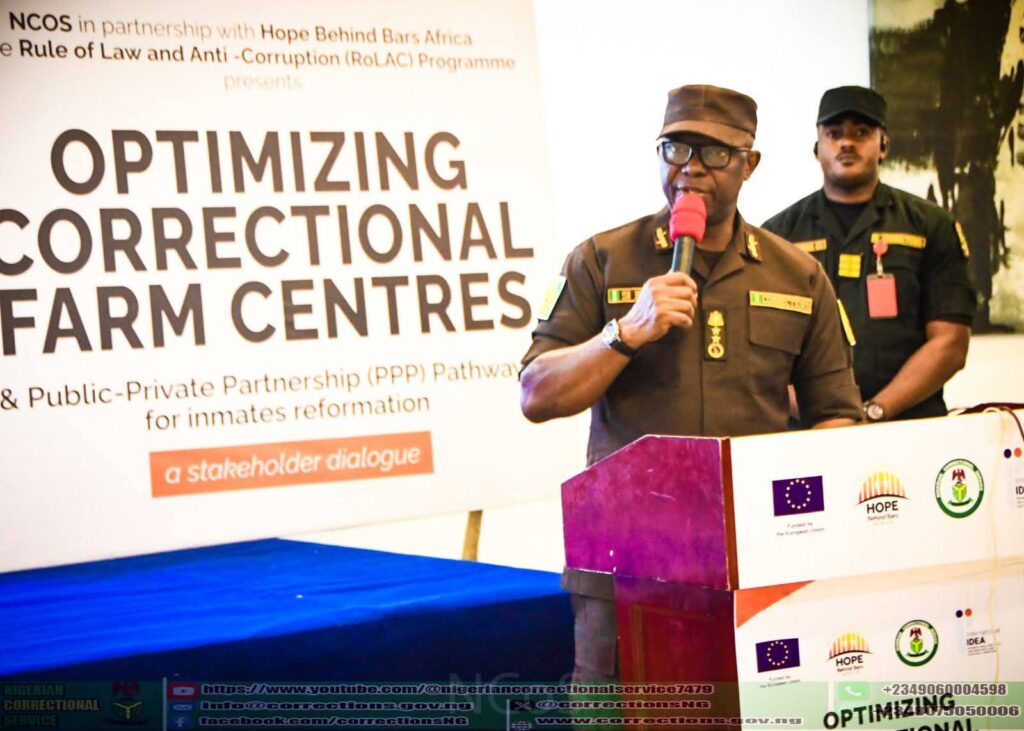
Controller-General of Corrections, Sylvester Ndidi Nwakuche, emphasised that correctional farming goes beyond food production to focus on human transformation and second chances.
“Our correctional farm centres are not just about agriculture; they are about restoring hope, dignity, and creating pathways to a productive future for inmates,” he stated.

Nwakuche highlighted the Service’s expanding agricultural initiatives, including 12 agricultural projects, 9 piggery projects, and 11 fisheries and other agro-based projects nationwide, producing key commodities such as rice, sorghum, millet, and vegetables.
Permanent Secretary, Magdalene Ajani, representing the Honourable Minister of Interior, Dr. Olubunmi Tunji-Ojo, stated that the engagement aimed to chart a clear and transformative roadmap anchored on structured PPPs. She urged participants to support inmates’ rehabilitation by patronising products from correctional industries.

The event featured presentations, success stories from beneficiaries of the Farming Justice Project, and the unveiling of a draft training manual to guide capacity-building efforts.
The NCoS reaffirmed its commitment to strengthening partnerships and deploying innovative approaches to inmate reformation and rehabilitation, calling on development partners, private sector investors, and stakeholders to collaborate in unlocking the full potential of correctional farm centres as viable platforms for skills acquisition, economic empowerment, and national development.
