
By Danjuma Amodu
A United Nations envoy and the Director-General of the Institute for Peace and Conflict Resolution (IPCR), Dr Joseph Ochogwu, have called for stronger measures to prevent electoral violence in Nigeria, warning against the exploitation of economic hardship, misinformation and disinformation to destabilise the 2027 general elections.
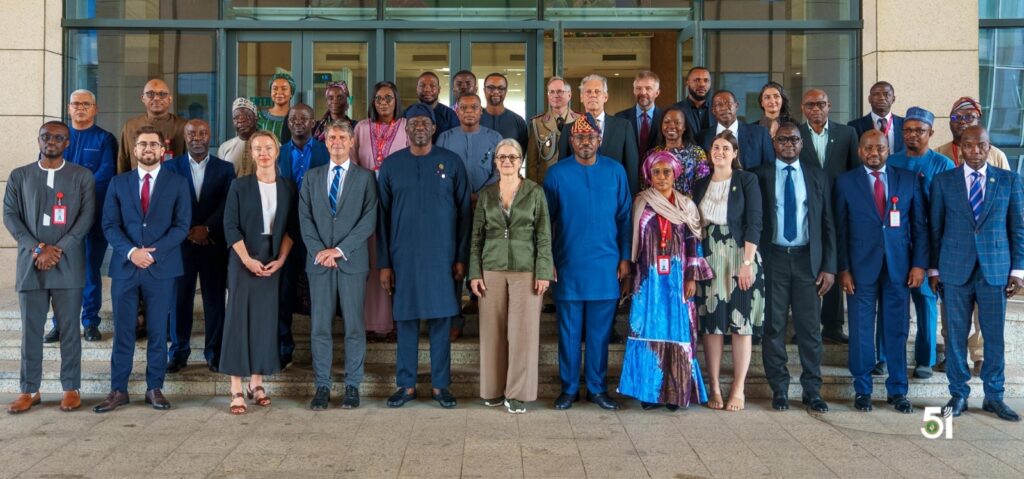
The call was made during a meeting between the UN Special Representative of the Secretary-General, Leonardo Santos Simão, and Ochogwu in Abuja, where they discussed Nigeria’s preparedness for the forthcoming elections and strategies for ensuring peaceful political participation before, during and after the polls.
Simão, who is in Nigeria on a working visit as part of a pre-election assessment, engaged critical stakeholders on emerging threats to electoral stability and the need to strengthen early warning, prevention and response mechanisms.
The discussions focused on political violence, election-related tensions, misinformation, disinformation and the growing influence of technology in shaping political narratives.
Ochogwu expressed confidence in Nigeria’s institutional capacity to prevent and manage election-related violence, noting that the country’s law enforcement agencies, military and intelligence services had the capacity to contain threats and prevent isolated incidents from escalating into widespread violence.
He, however, stressed the need to strengthen existing preventive mechanisms rather than allow political tensions to degenerate into violence.
A major concern raised by the IPCR boss was what he described as the need for the “de-weaponisation of hunger”, warning against attempts by political actors to exploit the economic difficulties confronting Nigerians for partisan mobilisation.
He noted that opposition parties could exploit inflation and the rising cost of living to mobilise public anger against the government, while urging the government to acknowledge the hardship faced by citizens and sustain interventions to cushion its effects.
According to him, the politicisation of economic hardship could deepen social tensions and transform legitimate public grievances into instruments of political conflict.
Ochogwu also warned against the growing use of misinformation, disinformation and malinformation in the electoral process, particularly through social media and emerging technologies.
He said technological advancement had created new opportunities for manipulating public opinion through false information, misleading narratives and potentially foreign-influenced content capable of heightening political tensions.
He therefore called for greater vigilance among political parties, security agencies, civil society organisations and technology platforms to prevent digital spaces from becoming instruments of electoral destabilisation.
The IPCR director-general further highlighted tensions between established authority, traditional political structures and democratic values, cautioning that political actors could exploit such divisions to undermine public confidence in democratic institutions.
He urged political parties to embrace conciliatory politics, restraint and greater accommodation of competing interests, warning against rhetoric that portrays political competition as a zero-sum contest in which opponents must be destroyed.
Ochogwu said both the ruling and opposition parties had responsibilities to maintain a peaceful political environment and ensure that their supporters refrained from inflammatory statements and violence.
He emphasised that the responsibility for sustaining democratic stability extended beyond election day, noting that political competition should give way to governance, reconciliation and national development after the polls.
The engagement forms part of broader consultations by the UN representative with Nigerian stakeholders to assess the country’s preparedness for the 2027 general elections and identify measures to strengthen peaceful political participation.
The discussions underscored the importance of early intervention, responsible political communication and collaboration among government institutions, political parties, security agencies, civil society and international partners in safeguarding Nigeria’s democratic process.
