
_…Former diplomat, reviewing Ambassador Chudi Okafor’s memoir, calls for reforms to restore professionalism, preserve history and strengthen diplomatic reciprocity_
Former Nigerian diplomat and public policy expert, Mr Oseloka Obaze, has expressed concern over the declining professional standards in Nigeria’s Foreign Service, calling for institutional reforms to strengthen the country’s diplomatic capacity, preserve institutional memory and restore professionalism in the conduct of foreign relations.
Obaze also urged retired ambassadors and career diplomats to document their experiences, warning that Nigeria risks losing valuable historical records, institutional knowledge and lessons from decades of diplomatic engagements if such accounts are not preserved for future generations.
He made the call while reviewing a 377-page memoir, My Diplomatic Sojourn – The Full Story, written by Ambassador Chudi Okafor, a retired career diplomat who served Nigeria for 35 years.
The book review, held at the Ministry of Foreign Affairs in Abuja, provided an opportunity to examine Nigeria’s diplomatic history, the challenges confronting its Foreign Service and the importance of institutional continuity in advancing national interests.
Obaze, a former Secretary to the Anambra State Government under Peter Obi and Willie Obiano, identified administrative bottlenecks and institutional weaknesses as factors undermining the effectiveness of Nigeria’s diplomatic establishment, warning that they had contributed to what he described as a “dilution of foreign service standards.”
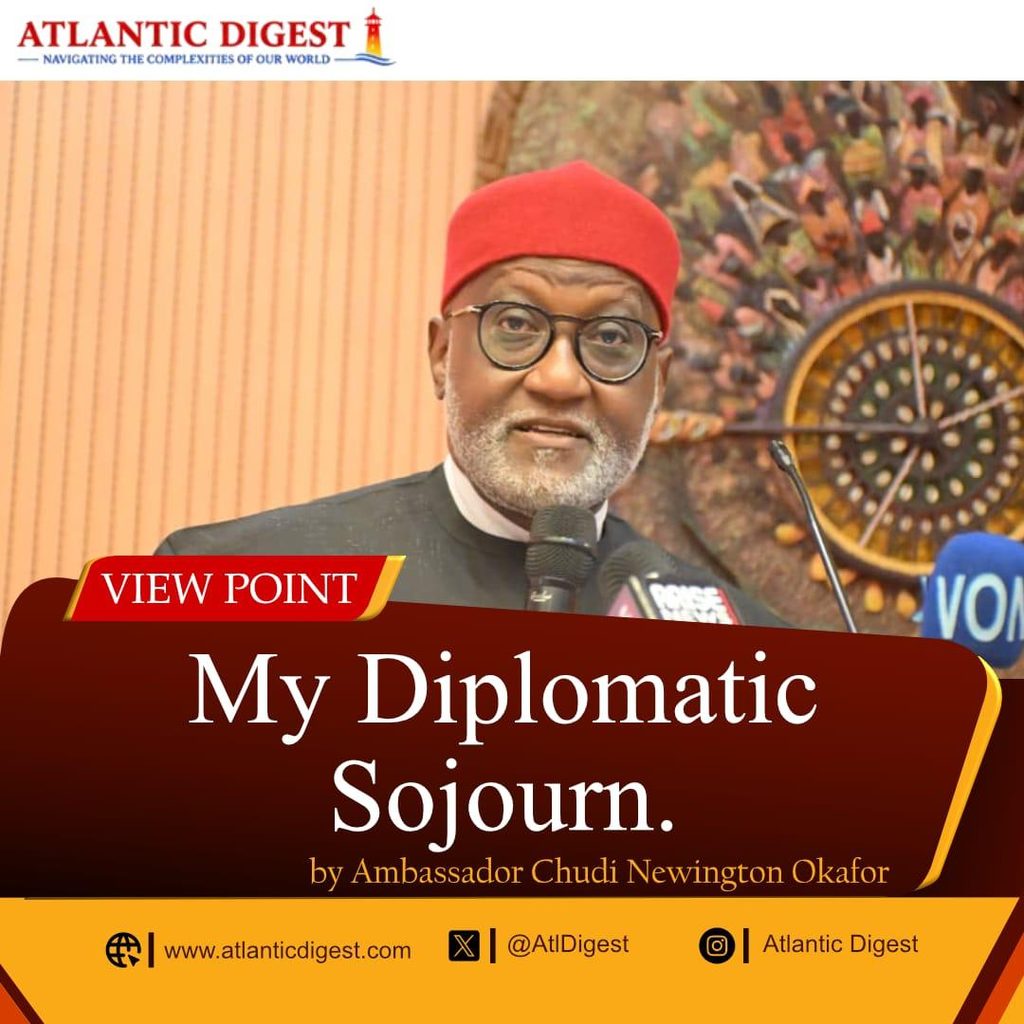
He noted that Okafor’s memoir offered valuable insights into the internal workings of Nigeria’s diplomatic service, highlighting the professional demands, administrative challenges and policy considerations that shaped the country’s foreign relations over several decades.
The former diplomat also raised concerns about diplomatic reciprocity in Nigeria’s bilateral relations, citing the country’s engagements with Russia as an example of the need for greater balance and mutual recognition in international partnerships.
He recalled that former President Olusegun Obasanjo undertook an official visit to Russia in March 2001, noting that Russian President Vladimir Putin had yet to make a reciprocal visit to Nigeria as of November 2026.
According to him, Putin’s visits to other African countries, including Egypt, South Africa, Algeria and Libya, raised questions about the level of reciprocal engagement between Nigeria and Russia, despite Nigeria’s strategic importance on the continent.
Obaze’s observations highlighted the need for Nigeria to continually evaluate its diplomatic relationships, strengthen its negotiating position and ensure that bilateral engagements deliver tangible benefits in line with the country’s national interests.
Reviewing the memoir, Obaze commended Okafor for documenting his diplomatic experiences while maintaining the discretion expected of a former public official entrusted with sensitive state information.
He described diplomatic memoirs as important historical resources that provide firsthand accounts of policy formulation, negotiations, international engagements and the institutional circumstances surrounding major foreign policy decisions.
Drawing on the words of English novelist George Meredith, Obaze described memoirs as “the back stairs of history”, noting their importance in revealing experiences and decisions often absent from official records.
He situated Okafor’s publication within Nigeria’s tradition of diplomatic memoir-writing, referencing accounts by distinguished diplomats and public officials, including Simon Adebo, Joe Garba, Olujimi Jolaoso, Olufemi George, Lawrence Agubuzu and Ade Adefuye.
He encouraged other retired diplomats and former foreign ministers to document their experiences, stressing that such publications would contribute to scholarship, diplomatic training, policy development and a better understanding of Nigeria’s place in international affairs.
The 13-chapter memoir chronicles Okafor’s early life, National Youth Service Corps experience and progression through Nigeria’s diplomatic establishment.
It also documents his foreign postings to Trinidad and Tobago, Malaysia, Russia, the United States, Thailand and Myanmar, reflecting the diversity of Nigeria’s bilateral engagements across different regions and political environments.
The book further examines his assignments at the Ministry of Foreign Affairs in Lagos and Abuja, as well as his service at the Office of the Secretary to the Government of the Federation.
With a career spanning 35 years, Okafor’s experiences provide insights into the evolution of Nigeria’s diplomatic institutions, the demands of representing the country abroad and the relationship between domestic administrative structures and foreign policy implementation.
Obaze recommended the memoir to diplomats, policymakers, researchers, students of international relations and members of the public interested in Nigeria’s diplomatic history.
He maintained that preserving the experiences of former diplomats would enrich the country’s historical records and enable successive generations of Foreign Service officers to learn from past achievements, challenges and missed opportunities.
