
‘I Cleaned You Up, I Stood Against You’ – Atiku Replies Obasanjo Over Third Term Comments
By Hassan Hussain
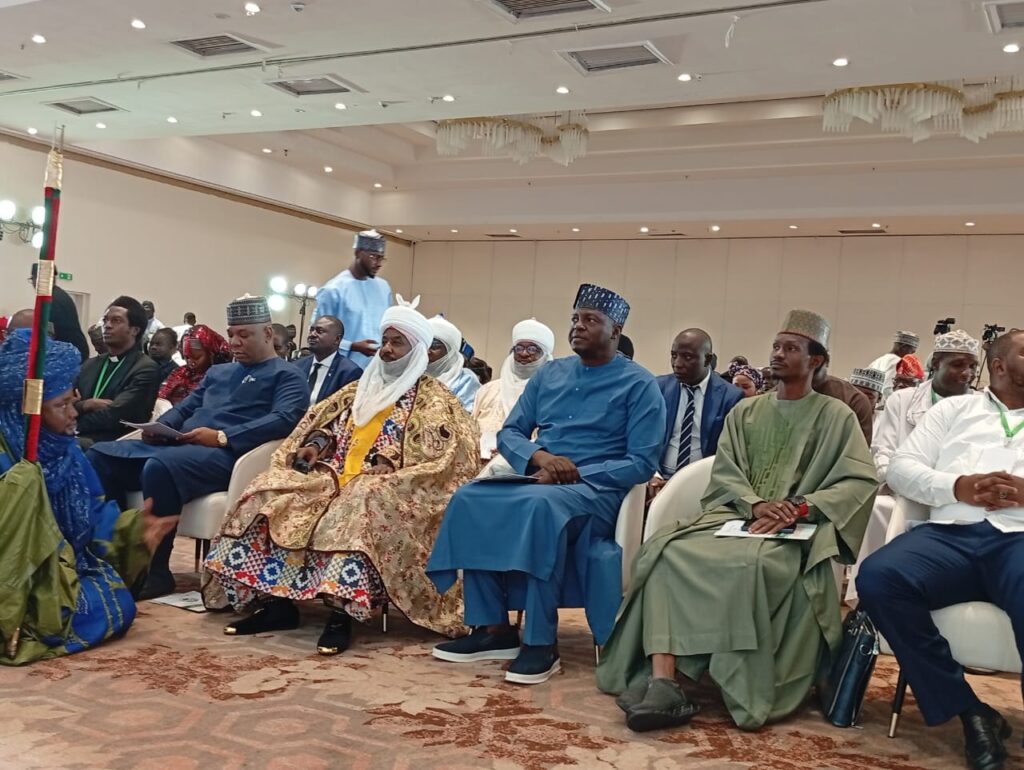
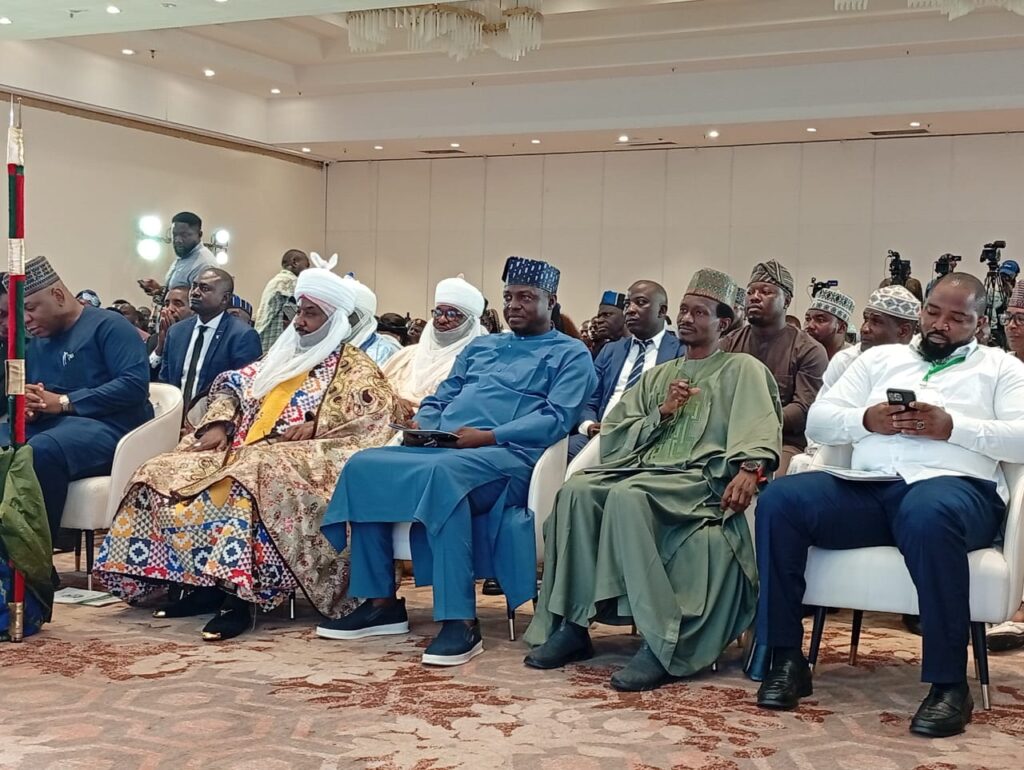
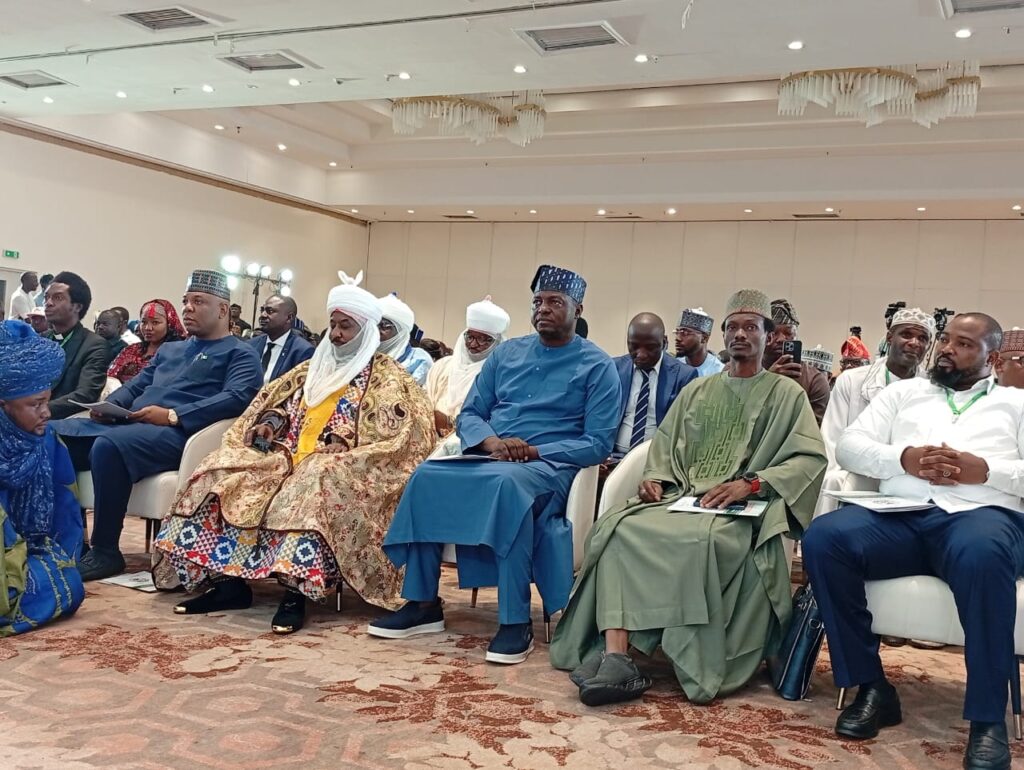
The Emir of Kano, His Royal Highness Muhammadu Sanusi II, has identified grassroots governance, rural development and a return to shared national values as critical steps towards addressing insecurity and strengthening national unity.
The Emir stated this while speaking at a security dialogue, where he stressed that local governments remain the most important tier of government because they are closest to the people.
He noted that the neglect of rural communities over the years has created ungoverned spaces, poor access to education and healthcare, unemployment and widespread poverty, factors he said have contributed to rising cases of crime, banditry and other security challenges.
His Royal Highness urged governments at all levels to invest more in rural development and ensure effective governance at the grassroots to address the root causes of insecurity.
The Emir of Kano also expressed concern over growing social divisions in the country, saying Nigerians should rise above ethnic and religious differences and embrace a common national identity.
He lamented what he described as the declining value placed on human life, stressing that every Nigerian life is precious and deserves equal protection, irrespective of location, ethnicity or religion.
On the fight against crime, the Emir called on citizens to work closely with security agencies by volunteering credible information, especially on criminal activities within their communities.
He also identified drug abuse as a major driver of violent crimes, urging community members to expose those involved in the trafficking and distribution of illicit drugs, while calling on relevant authorities to intensify efforts to curb the menace.
The Emir maintained that tackling insecurity requires more than military action, emphasizing the need for collective responsibility, community participation and the promotion of moral values.
He expressed optimism that despite the current security challenges, Nigeria would overcome its difficulties if citizens remained united and committed to building a peaceful and inclusive nation.
In a remark, the National Chairman of the All Progressives Congress, APC, Professor Nentawe Yilwatda, called on Nigerians to support the establishment of state police, describing security as the foundation for national prosperity and sustainable development.
Addressing the participants, Professor Yilwatda stressed that tackling insecurity requires the collective efforts of government, traditional rulers, religious leaders, community leaders and citizens, irrespective of religion, ethnicity or political affiliation.
According to him, protecting lives and property is the responsibility of everyone, noting that no meaningful business or economic growth can thrive in an atmosphere of insecurity.
Drawing from his experience as the former Minister of Humanitarian Affairs, Professor Yilwatda recalled visiting communities in the Lake Chad Basin, once regarded as one of Nigeria’s major food-producing areas, where he witnessed the devastating impact of insurgency on livelihoods and agricultural activities.
He said communities that were once economically vibrant had become impoverished as a result of prolonged insecurity.
The APC National Chairman stated that the party fully supports all government policies aimed at strengthening Nigeria’s security architecture, including the proposed State Police Bill initiated by President Bola Ahmed Tinubu.
Professor Yilwatda explained that although the National Assembly has passed the bill, it still requires the approval of at least two-thirds of the State Houses of Assembly before it can become law.
He appealed to governors, lawmakers, religious and traditional leaders, as well as other stakeholders, to mobilize support for the legislation, saying state policing would enable the recruitment of personnel who understand local languages, cultures and community dynamics, thereby improving intelligence gathering and crime prevention.
Professor Yilwatda also highlighted the Tinubu administration’s economic development agenda, saying the government is pursuing infrastructure projects designed to stimulate growth, reduce poverty and address the root causes of insecurity.
He listed the construction of five deep seaports in Akwa Ibom, Calabar, Port Harcourt, Ondo and Lagos, alongside the ongoing Coastal Highway and rail infrastructure linking the ports to major cities across the country, as strategic investments expected to boost trade, lower the cost of imported goods and enhance economic prosperity.
While commending the organizers of the programme for promoting dialogue on national security, and describing the initiative as timely and essential to Nigeria’s development, the APC National Chairman expressed confidence in Nigeria’s future, urging citizens to remain united in building a peaceful, secure and prosperous nation.
The Minister of Steel Development, Prince Shuaibu Audu, explained that the revival of the Ajaokuta Steel Complex will play a strategic role in strengthening Nigeria’s security architecture and creating massive employment opportunities across the country.
The Minister further commended President Bola Ahmed Tinubu for recent gains in the fight against insecurity.
He cited the successful rescue of the abducted Oyo schoolgirls, improved intelligence-sharing with the United States Government, and the elimination of a top ISIS commander in the Sahel region as evidence of progress in the nation’s security efforts.
“It is important to acknowledge the efforts and the success of Mr. President, President Bola Ahmed Tinubu, in some of the recent positive developments we’ve had in terms of security, including the release of the captured Oyo schoolgirls and our strengthened partnership with the U.S. Government to improve intelligence sharing and the capacity of our armed forces,” he said.
Prince Audu noted that the Federal Government is making significant progress towards reviving the Ajaokuta Steel Complex, revealing that discussions with a Chinese core investor have reached an advanced stage.
According to him, the investor is expected to commit between $1.5 billion and $2 billion towards the rehabilitation of the steel plant through new investments in equipment and capital.
“We have made significant progress in the revival of Ajaokuta Steel Complex, including advanced discussions with a Chinese core investor who is in the process of investing between $1.5 billion and $2 billion. We are hopeful that we can sign the agreement and make the announcement before the end of this year,” the Minister stated.
He explained that the Ministry had also secured a major milestone by signing a 20-year Gas Sale and Purchase Agreement with the Nigerian National Petroleum Company Limited, NNPC, to guarantee gas supply to the steel complex.
The Minister described the agreement as a critical step towards overcoming one of the major obstacles that has prevented Ajaokuta from producing liquid steel for nearly five decades.
“For almost five decades, Ajaokuta has not produced liquid steel. This government wants to completely change the story,” he emphasized.
Prince Audu further disclosed that the Ministry of Steel Development had signed a Memorandum of Understanding with the Ministry of Defence and the Defence Industries Corporation of Nigeria, DICON, to establish a military-industrial complex within the Ajaokuta Steel Complex.
He explained that the partnership would provide land for the facility and enable the use of the engineering workshop for the production of military hardware, including rifles, helmets, bullets and other defence equipment.
“The partnership with the Ministry of Defence and DICON will help us establish a military-industrial complex that will strengthen Nigeria’s security architecture through local production of military hardware,” he said.
The Minister stressed that a fully operational Ajaokuta Steel Complex could generate up to 500,000 direct and indirect jobs, especially with the development of an industrial park on its 24,000 hectares of land.
He maintained that job creation remains one of the most effective strategies for tackling insecurity and achieving the Federal Government’s economic agenda.
“Mr. President understands that one of the key solutions to addressing security challenges is the creation of jobs, jobs, jobs. We are on track to support his vision of building a one-trillion-dollar economy while winning the war against terrorism and other security challenges,” Prince Audu added.
The Minister acknowledged the Convener of the Security Summit, Alhaji Mohammed Ibrahim, for what he described as the excellent coordination of the programme.
Similarly, the National Coordinator of the Project 774 Network, Alhaji Muhammed Ibrahim, who spoke at the event themed “Supporting Our Troops, Strengthening National Unity and Advancing Peace and Development,” said the initiative was founded on the conviction that every Nigerian has a duty to contribute to the nation’s security.
According to him, citizens and leaders in all the 774 Local Government Areas of the country must move beyond being passive observers to becoming active partners in the fight against terrorism, banditry and kidnapping.
He noted that while the sacrifices of the nation’s Armed Forces deserve commendation, military operations alone cannot guarantee lasting peace, emphasizing that sustainable security must be driven by community participation and collaboration.
The National Coordinator explained that the stakeholders’ engagement was convened to bring together leaders from different sectors to deliberate on practical and lawful measures that would be implemented across communities nationwide.
He assured troops on the frontline of the support and solidarity of Nigerians, while urging citizens to actively support efforts aimed at safeguarding lives and property.
Alhaji Ibrahim also expressed appreciation to the National Security Adviser, the keynote speaker, development partners and other stakeholders for participating in the engagement.
He expressed optimism that the meeting would culminate in the adoption of the Abuja Declaration, which he described as a new compact between citizens and the government towards promoting peace, national unity and sustainable development.
Also in attendance were the National Secretary of the Project 774 Network, retired Deputy Inspector General of Police Mohammed Usaini Gumel, alongside distinguished guests, representatives of government, security agencies, traditional and religious leaders, development partners and members of the media.
