
By Hassan Hussain
The Federal Government has established a Brain Health Desk under the National Mental Health Programme as part of efforts to strengthen the prevention, diagnosis, treatment and rehabilitation of neurological disorders across Nigeria.
The Coordinating Minister of Health and Social Welfare, Professor Muhammad Ali Pate, announced the initiative at the commemoration of this year’s World Brain Day in Abuja. The Minister, who was represented by the Permanent Secretary of the Federal Ministry of Health and Social Welfare, Ms. Daju Kachollom, also unveiled plans to develop Nigeria’s first National Brain Health Agenda.
The event, themed “Brain Health: Access for All,” brought together development partners, healthcare professionals, researchers, policymakers, civil society organisations and the media to advocate equitable access to quality brain health services.
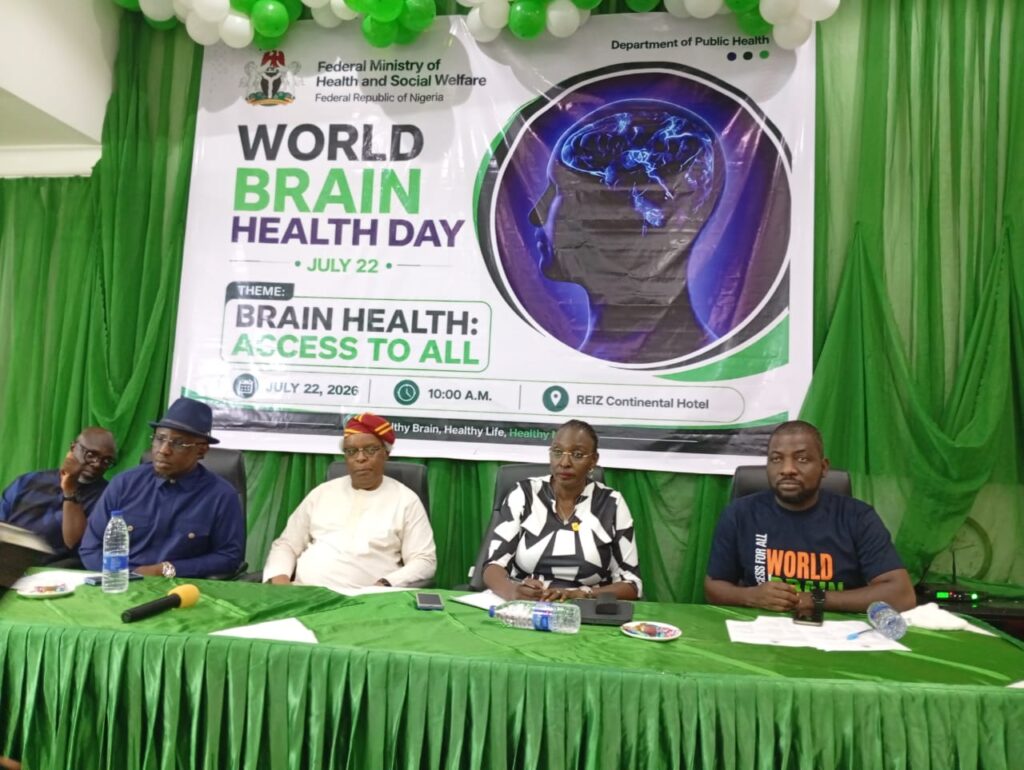
Professor Pate described brain health as a fundamental pillar of human wellbeing, stressing that quality neurological and mental health services should be available to every Nigerian regardless of age, gender, income or geographical location.
“Brain health is not a privilege reserved for a few, but a fundamental component of Universal Health Coverage that must be accessible to everyone.”
The Minister noted that neurological disorders remain the leading cause of disability globally, affecting more than 3.4 billion people, while Nigeria continues to record increasing cases of stroke, epilepsy, dementia, Parkinson’s disease, traumatic brain injuries and neurodevelopmental disorders.
He observed that stroke remains one of the country’s leading causes of death and long-term disability, while stigma and discrimination continue to prevent many people living with epilepsy and other neurological conditions from seeking treatment.
Professor Pate explained that the newly established Brain Health Desk would provide national leadership in policy development, advocacy, research, partnerships and capacity building, while coordinating efforts on prevention, early diagnosis, treatment, rehabilitation, surveillance and long-term support for persons living with neurological disorders.
“The Federal Ministry of Health and Social Welfare will establish a Brain Health Desk under the National Mental Health Programme. This marks a significant milestone in Nigeria’s efforts to strengthen national leadership and coordination for brain health.”
He disclosed that the proposed National Brain Health Agenda would serve as a comprehensive framework to guide investments, strengthen governance, promote research and innovation, build workforce capacity and improve access to quality neurological services nationwide.
The Minister said the initiative aligns with President Bola Ahmed Tinubu’s Renewed Hope Agenda, the Nigeria Health Sector Renewal Investment Initiative, and the World Health Organisation’s Intersectoral Global Action Plan on Epilepsy and Other Neurological Disorders (IGAP) 2022–2031.
Professor Pate also announced that World Brain Day would henceforth be included in the Federal Ministry of Health and Social Welfare’s annual national health commemoration calendar to sustain advocacy and public awareness.
He called on professional associations, universities, research institutions, development partners, civil society organisations, traditional and religious leaders, the media and the private sector to support government efforts in promoting brain health through increased awareness, early diagnosis, healthy lifestyles and improved access to rehabilitation services.
“Our vision is a Nigeria where every person has equitable access to quality brain health services; where neurological disorders are prevented wherever possible, detected early, treated effectively and managed with dignity and compassion.”
Also speaking, the National Coordinator of the National Mental Health Programme, Dr. Tunde Ojo, reaffirmed the government’s commitment to expanding brain and mental health services through stronger partnerships, research, innovation and community-based interventions.
Dr. Ojo described this year’s World Brain Day as another milestone in Nigeria’s efforts to promote prevention, education, early diagnosis, treatment, rehabilitation and long-term care for neurological disorders.
He stressed that brain health remains essential to learning, productivity, healthy ageing and national development, insisting that access to quality care should not depend on socio-economic status or place of residence.
According to him, neurological disorders continue to impose enormous social and economic costs through reduced productivity, increased healthcare expenditure and diminished quality of life for affected individuals and their families.
Dr. Ojo noted that many neurological disorders are closely linked to mental health conditions such as depression and anxiety, making integrated and people-centred healthcare imperative.
“The Ministry recognises these realities and remains committed to strengthening brain health as part of broader efforts to improve the health and wellbeing of Nigerians.”
He said the National Mental Health Programme is collaborating with stakeholders to integrate neurological and mental health services into the healthcare system while strengthening research, workforce development and evidence-based policymaking.
Dr. Ojo urged researchers, healthcare professionals, policymakers and development partners to deepen collaboration to improve brain health outcomes across the country.
In a remark, Chairman of the Mental Health Technical Working Group, Professor Oye Gureje, emphasised the need to improve access to quality brain health services through increased public awareness, early diagnosis and timely treatment.
Professor Gureje said only about 20 per cent of Nigerians living with mental health conditions are aware of their illness or receive treatment, describing the situation as a major public health concern.
“Brain Health: Access for All means creating opportunities for people living with brain health conditions to receive early diagnosis, treatment and intervention. Unfortunately, only about 20 per cent of Nigerians with mental health conditions know about their illness or receive care.”
He identified changes in behaviour, inability to cope with stress, persistent sleep disturbances, social withdrawal and difficulty carrying out daily activities as warning signs requiring prompt medical attention.
Professor Gureje also advised Nigerians to seek immediate medical care for symptoms such as sudden weakness, paralysis or persistent memory loss, noting that early diagnosis significantly improves treatment outcomes.
He, however, stressed that while family members can recognise early warning signs, only qualified healthcare professionals can make a definitive diagnosis after proper medical evaluation.
The World Brain Day celebration attracted development partners, healthcare professionals, researchers, policymakers, civil society organisations, members of the media and other stakeholders committed to advancing brain health and expanding access to quality neurological care in Nigeria.
