
Hassan Hussain | March 25, 2026
The Federal Government has reaffirmed its commitment to strengthening Nigeria’s healthcare system through innovation, partnerships, and equitable access to services. Dr. Salma Ibrahim Anas, Senior Special Adviser to the President on Health Matters, made this known at the “Eyeball” Summit 2026, organized by the Optometrists and Dispensing Opticians Registration Board of Nigeria in collaboration with the Federal Ministry of Health and Social Welfare.
Declaring the Summit Opened Obehalf of President Bola Ahmed Tinubu, Dr. Anas said the initiative aligns closely with the national goal of achieving health equity, sustainable financing, innovation in optical care and universal health coverage.
According to her, these are not just aspirations but necessary realities that must be pursued to build a healthier and more productive society.
Dr. Anas stressed that without good health, meaningful national development cannot be achieved, describing healthcare as a critical component of Nigeria’s development agenda.
She commended stakeholders, including optometrists, dispensing opticians, sponsors and the academic community, for their contributions towards the success of the summit.
The Presidential Adviser on Health Matters noted that their dedication reflects the spirit of collaboration required to transform healthcare delivery across the country.
She urged participants to remain mindful that behind every policy, innovation and investment are millions of Nigerians whose lives can be transformed through improved vision and access to quality healthcare.
She also emphasised the importance of grassroots implementation, particularly at the local government level, to ensure that eye care services are fully integrated into primary healthcare delivery nationwide.
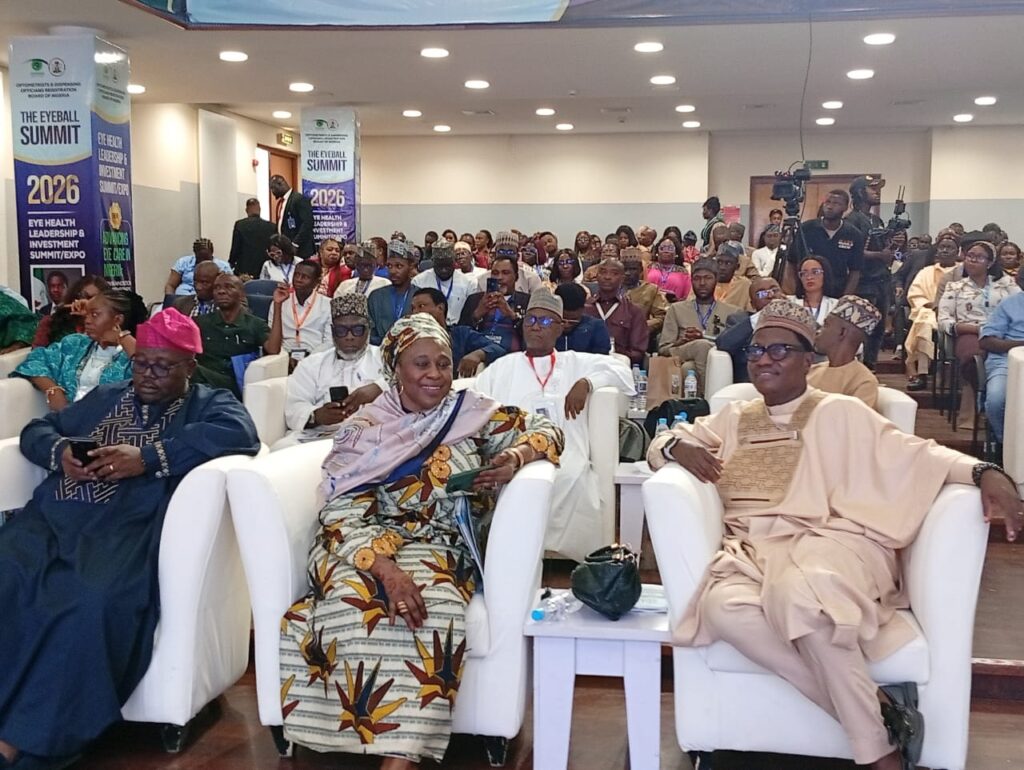
In a remark, the Registrar, Optometrists and Dispensing Opticians Registration Board of Nigeria, Dr. Obinna Awiaka,
Awiaka who underscored the importance of collaboration among ophthalmologists, optometrists, dispensing opticians, ophthalmic nurses and other stakeholders in achieving sustainable progress in the sector called for bold reforms, innovation and strategic partnerships towards addressing the growing burden of visual impairment in the country.
He described the event as a critical platform to chart a new course for advancing eye health care in Nigeria.
He noted that despite global recognition of eye health as a key component of public health, economic productivity and social well-being, millions of Nigerians still live with preventable or treatable visual impairment.
According to him, the situation is largely due to limited access to professional eye care services, inadequate awareness, poor infrastructure and uneven distribution of eye care professionals across both urban and rural areas.
Dr. Awiaka stressed that the current realities require innovative thinking and strategic reforms to improve service delivery.
“The summit provides a unique opportunity for stakeholders to exchange ideas, share best practices and develop partnerships that will accelerate progress towards accessible and sustainable eye care systems in Nigeria,” he said.
The Registrar also expressed concern over Nigeria’s total dependence on imported optical products, including frames, lenses and accessories, warning that global disruptions could significantly affect access to basic eye care tools.
He cited recent supply challenges linked to international conflicts as a wake-up call for Nigeria to invest in local production within the optical value chain.
Dr. Awiaka therefore urged stakeholders to explore partnerships with institutions such as the Bank of Industry to drive investments in local manufacturing and strengthen the sector.
He further highlighted the role of emerging technologies such as tele-optometry, artificial intelligence and digital health platforms in transforming eye care delivery.
The Registrar reaffirmed the Board’s commitment to regulating the practice of optometry and dispensing optics in Nigeria emphasized the need to expand access to affordable and quality eye care services, noting that every Nigerian, regardless of location or socio-economic status, deserves proper eye health services.
Other stakeholders who spoke on the theme of the event “
Advancing Eye Care in Nigeria: Driving Innovation and Partnerships for Sustainable Development” described the Summit as apt which remains a vital platform for fostering dialogue, innovation and partnerships aimed at strengthening Nigeria’s eye care system.