
By Danjuma Amodu
The National Drug Law Enforcement Agency (NDLEA) has intensified its capacity to detect concealed narcotics at Nigeria’s entry points with a specialised retraining of its canine handlers by German experts.
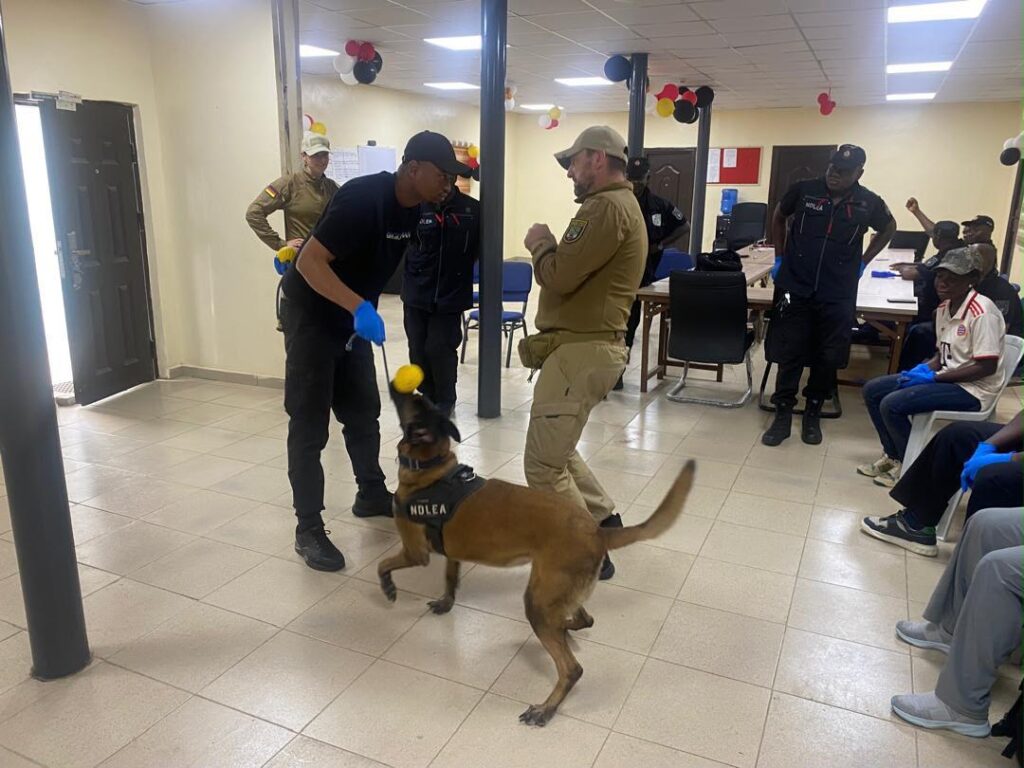
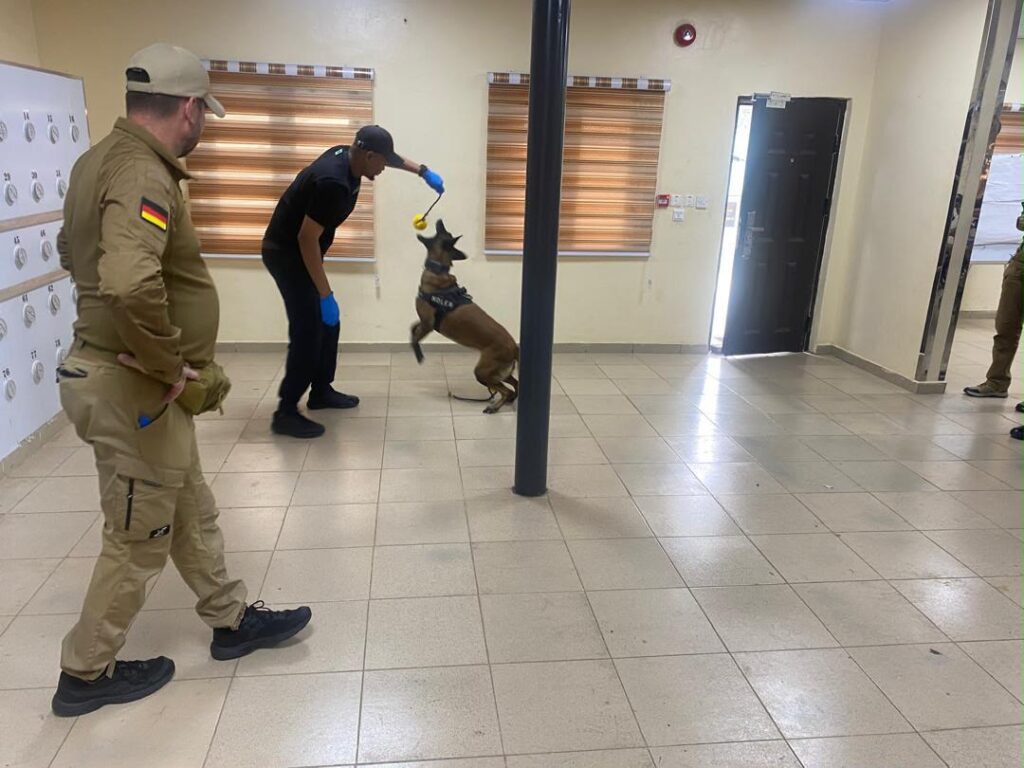
The refresher course, organised in collaboration with Germany’s Bundeskriminalamt (BKA), was designed to improve the ability of handlers and their service dogs to detect narcotics and counter increasingly sophisticated concealment methods employed by drug traffickers.
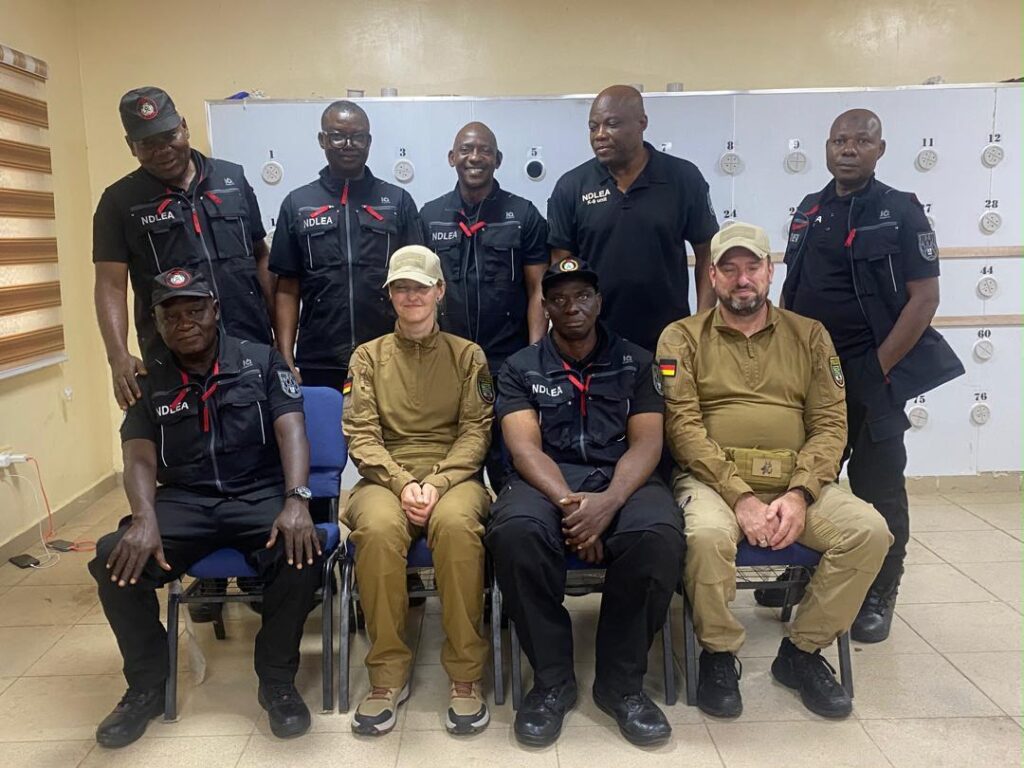
The training was conducted at the NDLEA Canine Unit Facility in Lagos by two German technical dog-handling experts, Andreas Roscher and Jacqueline Shüler.
Spokesman of the agency, Femi Babafemi, said 11 personnel from the Canine Unit, comprising the unit commander, two veterinary doctors and eight dog handlers, participated alongside their service dogs. Five additional officers from Lagos commands interested in joining the unit also took part.
He said the exercise went beyond classroom instruction to include practical simulations at some of the country’s busiest aviation and maritime facilities, including the Murtala Muhammed International Airport (MMIA) baggage hall, APM Terminals Apapa and the MMIA NAHCO export shed.
Participants were trained in advanced obedience and control, narcotics detection, scent imprinting and search patterns, as well as safe deployment of canine assets during high-risk operations.
Chairman/Chief Executive Officer of the NDLEA, Brig. Gen. Buba Marwa (rtd), said the training underscored the agency’s determination to maintain a highly skilled workforce capable of responding to evolving trafficking techniques.
“Our canine teams remain one of the most potent assets in our detection and interdiction efforts, and this is why we will continue to invest in their retraining and welfare,” Marwa said.
He noted that the successes recorded at airports, seaports and border posts in intercepting concealed narcotics were largely due to the dedication and sharpened instincts of the dogs and their handlers, adding that the collaboration would bring the unit’s operations closer to international standards.
Marwa however acknowledged manpower and logistical gaps facing the unit, particularly the need for additional service dogs, trained personnel and boarding facilities to provide adequate coverage across seaports, international airports and land borders.
He said steps were being taken to address the gaps and supported the recommendation that the refresher training should become an annual exercise.
