
By Kizito Ozoemena
The National Human Rights Commission (NHRC) has urged teachers to lead the promotion of human rights in schools, saying instilling dignity, equality, tolerance and respect in children is vital to building a peaceful and just society.
The Commission said Civic Education teachers and guidance counsellors must go beyond classroom teaching to equip pupils with the knowledge and confidence to recognise rights violations, reject discrimination and violence, and speak out against abuses.
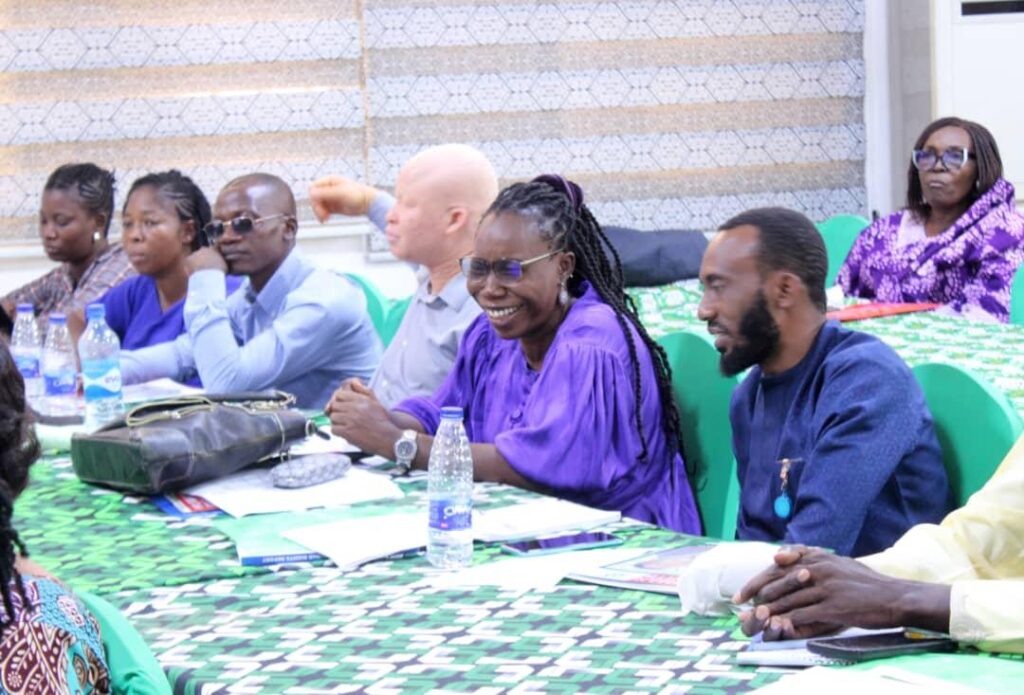
The Director, Legal Services and Enforcement, NHRC, Mrs. Rabi Anwar, stated this while representing the Executive Secretary, Chief Tony Ojukwu, SAN, at a human rights capacity-building workshop for Civic Education and Guidance and Counselling teachers in the Federal Capital Territory, Abuja.
Anwar described teachers as critical stakeholders in shaping the values and conduct of the next generation, noting that their influence positions them to nurture responsible citizens who understand their rights and obligations.
She said the training was designed to strengthen teachers’ grasp of human rights principles and equip them with practical skills to integrate rights education into teaching, counselling, school management and extracurricular activities.
According to her, the knowledge should translate into safer, more inclusive and peaceful learning environments where every child is treated with dignity and given equal opportunity to participate.

She added that effective human rights education requires sustained collaboration among school administrators, government institutions, parents, civil society organisations and other stakeholders, and cannot be achieved by teachers alone.
The workshop featured sessions on the foundations of human rights, the role of Civic Education teachers in promoting active citizenship, and the role of guidance counsellors in preventing and responding to violations affecting pupils.
A facilitator, human rights education expert, Mr. Saka Azimazi, Esq., examined the historical development of human rights and principles underpinning justice, dignity and respect for human life.
He traced key milestones from ancient legal codes and the Magna Carta to Enlightenment philosophy, the American and French declarations, and the 1948 Universal Declaration of Human Rights, and explored the relationship between human rights, religion, morality and culture, including the debate between universalism and cultural relativism.
Another expert, Mrs. Ifeoma Nwakanma, urged teachers to create classrooms where pupils can freely express views, participate in school activities and understand their rights and responsibilities without fear of intimidation or discrimination.
She encouraged the promotion of student councils and peer education initiatives as practical avenues for nurturing participation, responsibility and respect for differing opinions.
In a related session, guidance counsellor, Mrs. Henrietta Okechukwu, emphasised the role of counsellors in protecting students from abuse and rights violations, including bullying, discrimination, violence, online harm and mental health distress.
She said counsellors must prevent and identify violations early, provide appropriate support, ensure referrals where necessary, and apply child-protection principles when handling school-related challenges.
The workshop stressed that human rights education should be an integral part of school life, not merely a theoretical subject.
