
By Prof. M.K. Othman
As humans, we are forgetful, but we should not forget the recent decline and devastating deterioration of Nigerian universities before the current political dispensation under President Bola Ahmed Tinubu.
Repeated disruptions fractured research agendas and instilled in students an educational culture where prolonged strikes were expected rather than exceptional. A four- or five-year academic program could stretch to six to eight years, with staff and students as the primary victims and the nation as the ultimate loser. The 2009 FGN-ASUU imbroglio has a long history, culminating in 13 months of cumulative industrial action between 2010 and 2025 and 21 months between 2015 and 2023, amounting to a loss of two years and ten months of academic activities on university campuses.
The costs and consequences of the FGN-ASUU crisis in those years were devastating and indescribable, and they contributed to the deaths of several university lecturers during and after the 2022 industrial action. For example, Dr. Ayo Ojediran of the Faculty of Education at Obafemi Awolowo University slumped and died in his office; the University of Calabar alone lost more than 15 teaching staff during the industrial action, and many universities reported similar tragedies, along with a brain drain – a national loss of intellectuals.
With this brief historical background, we can appreciate the rise of Nigerian universities and, more importantly, the growing institutional capacity it reflects. Some institutions are making waves in global rankings, even though the rise has not been a straight line because institutions shift as their performance, competitors, and ranking methodologies change.
Rankings are imperfect, but their indicators — teaching, research environment and quality, international outlook, and industry engagement — reflect real institutional capacities. Sustainable performance, therefore, requires funded research, credible postgraduate training, functioning laboratories and libraries, international collaboration, and reliable institutional data.
The foundations of this rise also predate President Bola Ahmed Tinubu, who assumed office on 29 May 2023. However, he deserves overwhelming credit and applause for establishing Yayale Ahmed’s negotiation team and for accepting and implementing its recommendations. Before the Yayale Ahmed team, the Memorandum of Understanding and Memorandum of Action willingly signed by FGN and ASUU were jettisoned, and the negotiation reports of Profs Munzali Jibrin and Briggs on how to achieve a sustainable resolution to the university crisis were ignored and not implemented.
By accepting the Yayale Ahmed team’s recommendations, President Tinubu allowed intervention organizations to do their work: TETFund interventions, World Bank-supported African Centers of Excellence, and institutional research initiatives, while supporting the work of Nigerian academics accumulated over many years.
When THE examined Nigeria’s sharp improvement in its 2023 rankings, former World Bank tertiary education coordinator Jamil Salmi pointed to the research capacity built through Nigeria’s regional Centers of Excellence. The present administration therefore inherited a trajectory that it vigorously pursued to a higher level. Its record should be judged on how it has strengthened the conditions that sustain that trajectory.
On that measure, there are developments worth acknowledging: TETFund remains perhaps the most consequential public financing mechanism for tertiary education in the country. Under Executive Secretary Sonny Echono, with the firm supervision and support of the Education Minister, Dr. Maruf T. Alausa, its interventions extend beyond physical infrastructure to research, academic staff development, laboratories, ICT, innovation, career and entrepreneurship, medical education, and other institutional needs.
Government figures put TETFund funding at about ₦320.3 billion in 2023, ₦683.4 billion in 2024, and approximately ₦1.6 trillion in 2025. Although increased allocation matters, expenditure must not be confused with outcomes; the real test is whether these funds produce functional laboratories, stronger research groups, useful patents and innovations, better libraries and digital access, internationally competitive publications, and graduates equipped for the economy they enter. The 2027 THE results for Nigeria’s public universities further support the FGN’s backing through TETFund.
Furthermore, the Nigerian Education Loan Fund (NELFUND) addresses another weakness: access to tertiary education by indigent students. President Tinubu formally launched NELFUND’s digital disbursement process in July 2024. By December 2025, the Government reported that ₦86.3 billion had been disbursed to more than 450,000 students in 218 tertiary institutions.
On April 8, 2026, Mr. Akintunde Sawyer, NELFUND’s Managing Director and Chief Executive Officer, visited the Federal University of Dutsin-Ma in Katsina State, where he addressed students and announced that the Fund had disbursed over ₦240 billion in institutional fees and living stipends to more than 1.3 million students across public tertiary institutions in Nigeria since the program began in 2024. This means that, on average, each beneficiary received approximately ₦184,615 to cover their educational costs.
From April to August 2026, NELFUND disbursements to students increased from ₦240 billion to ₦322 billion. In the last six months, hundreds of thousands of students must have benefited from NELFUND disbursements, creating hope and aspiration for a better tomorrow. In an economy in which household incomes have been severely squeezed, NELFUND’s intervention is potentially consequential. NELFUND does not merely alleviate financial burdens in education; it strengthens Nigeria’s foundation for sustainable national growth, as an educated and empowered youthful population is essential for national productivity and social stability.
So far, NELFUND has credibly worked to ensure Nigerian students are not withdrawn for inability to pay fees or meet basic survival needs due to lack of upkeep, as it provides a monthly stipend of 20,000 naira for upkeep. As a result, a student who withdraws for inability to meet institutional charges is not merely an access statistic; it is a loss of human capital to the nation.
As someone who has been part of the university system since the early 1980s, first as a student, then as a young researcher, and now with over three decades in the system, I have witnessed the ebb and flow of educational policies, their shifts, and their impact on the lives of students and staff. I recall that during the economically difficult 1990s, many students at public universities faced escalating tuition, despite government subsidies. As subsidies declined and living costs rose, the strain worsened.
Many students worked part-time, tutored privately, or started their own businesses to supplement their income. While these efforts demonstrated tenacity, they came at the expense of academic development, sometimes resulting in longer graduation timelines, lower performance, or even dropping out of the university with unrealized dreams. Now, I can confidently say that NELFUND has made a real difference in pulling students back from that hopeless trajectory. This sentiment resonates with many students and administrators in our academic community. They see the positive shifts NELFUND is creating, birthing a new era and renewed hope for access to higher education.
In today’s economy, many household incomes have been severely squeezed; NELFUND’s intervention is having a consequential positive impact on families, as many parents no longer worry about providing financial support for their children attending higher education in Nigerian public tertiary institutions. As a result, access and quality reinforce each other, helping the university system achieve its current global ranking and creating hope for quality leadership for Nigeria’s future, as today’s youth are tomorrow’s leaders.
NELFUND’s milestone reflects the program’s potential and the tangible changes it has brought to tertiary education in Nigeria. Thanks to President Bola Ahmed Tinubu’s initiative, which has renewed hope for access to higher education in Nigeria, and a salute to the FGN for the strong showing of Federal universities in the 2027 THE, the story so far is one of progress and promise.
What role has academia played in the global ranking of our universities? To be concluded next week.
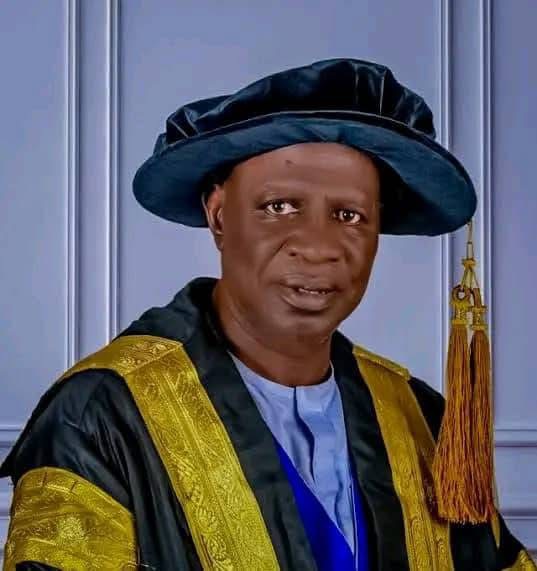
Prof. Mohammed Khalid Othman (MNSE, MNIAE, MASABE, MISTRO), popularly known as M.K. Othman, is a Professor of Agriculture and Vice-Chancellor of the Federal University Dutsin-Ma (FUDMA), Katsina State.
EDITOR’S NOTE:
This is the second part of a two-part opinion series on the resurgence of Nigerian universities. The views expressed are those of the author, Prof. M.K. Othman, and do not necessarily reflect the editorial position of this publication.
