
By Danjuma Amodu
In a rare convergence of policy and practice, Ghana hosted two high-level health gatherings within 72 hours this week, underscoring the country’s emerging role as a regional hub for health sector reform and investment.
The back-to-back fora; the World Bank’s launch of the Fit to Prosper Regional Health Strategy on 4–5 May and the 2nd Africa Health Workforce Investment Forum from 6–8 May, have turned Accra into the continent’s health policy focal point, drawing ministers, development partners, civil society and private sector leaders in quick succession.
While distinct in mandate, the two events are intrinsically linked: one sets the broad economic and governance framework for health in West and Central Africa, the other drills down into the human resource crisis threatening to derail it.
FROM STRATEGY TO WORKFORCE
The Fit to Prosper launch brought together 12 ministers of health and finance to endorse a World Bank-backed roadmap aimed at accelerating universal health coverage and linking health investment to job creation and economic growth.
Ghana’s Chief of Staff Julius Debrah captured the sentiment, stating: ‘By investing in health, we are investing in jobs, in stability, and in the future of Western and Central Africa.’

Health Minister Kwabena Mintah Akandoh reinforced that vision, warning that ‘no society can fully realise its potential if its children are malnourished, if mothers cannot access safe care, or if families are pushed into poverty because of the cost of illness.’
Three days later, the focus shifted from financing frameworks to the people delivering care. At the Marriott Hotel, Nigeria’s Minister of State for Health and Social Welfare, Dr Iziaq Adekunle Salako, opened the 2nd Africa Health Workforce Investment Forum with a blunt assessment.
‘Africa’s health workforce is the backbone of our continent’s health systems and the foundation for achieving universal health coverage. Yet today, we face a growing paradox: a rising burden of disease on one hand, and a critical shortage of skilled health workers on the other,’ he said.
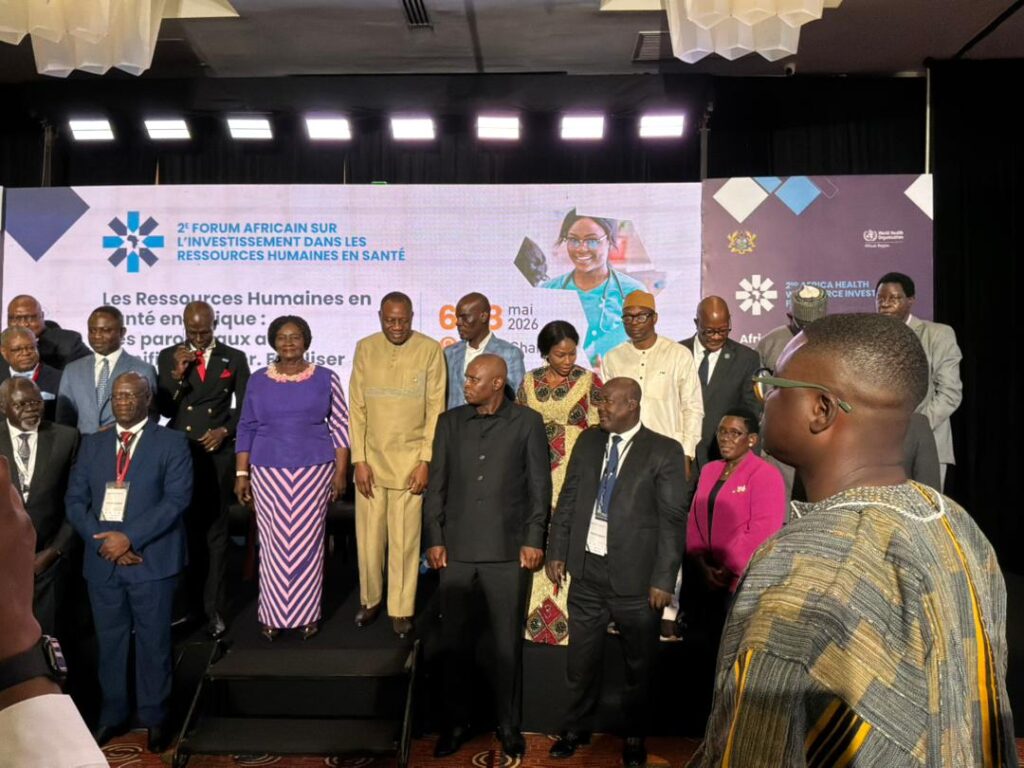
ACCRA’S MOMENT OF CONVERGENCE
The sequencing is no accident. The Fit to Prosper strategy identifies health workforce strengthening as one of its three pillars under ‘Frontlines First’, calling for greater investment in community health workers and digitally enabled primary care. The Health Workforce Investment Forum now provides the operational platform to translate that pillar into action, particularly around the Africa Health Workforce Investment Charter.
For Ghana, the double hosting is both symbolic and strategic. It signals Accra’s credibility as a convening space for continental health dialogue while allowing the government to align its national UHC roadmap with both regional financing and workforce priorities.
CONNECTING POLICY TO PRACTICE
What makes this week significant is not just the volume of high-level attendance, but the policy continuity between the macro and the micro. The World Bank strategy speaks to billions of dollars in potential investment across 22 countries. The workforce forum speaks to who will actually deliver those services, and under what conditions.
The question now is implementation. Stakeholders say coherence will be the decisive factor.
As Salako put it: ‘As we deliberate over the next three days, I urge us all to move from dialogue to concrete commitments. Let us prioritise investments that protect our health workers, improve their working conditions, and create opportunities for professional growth within Africa.’
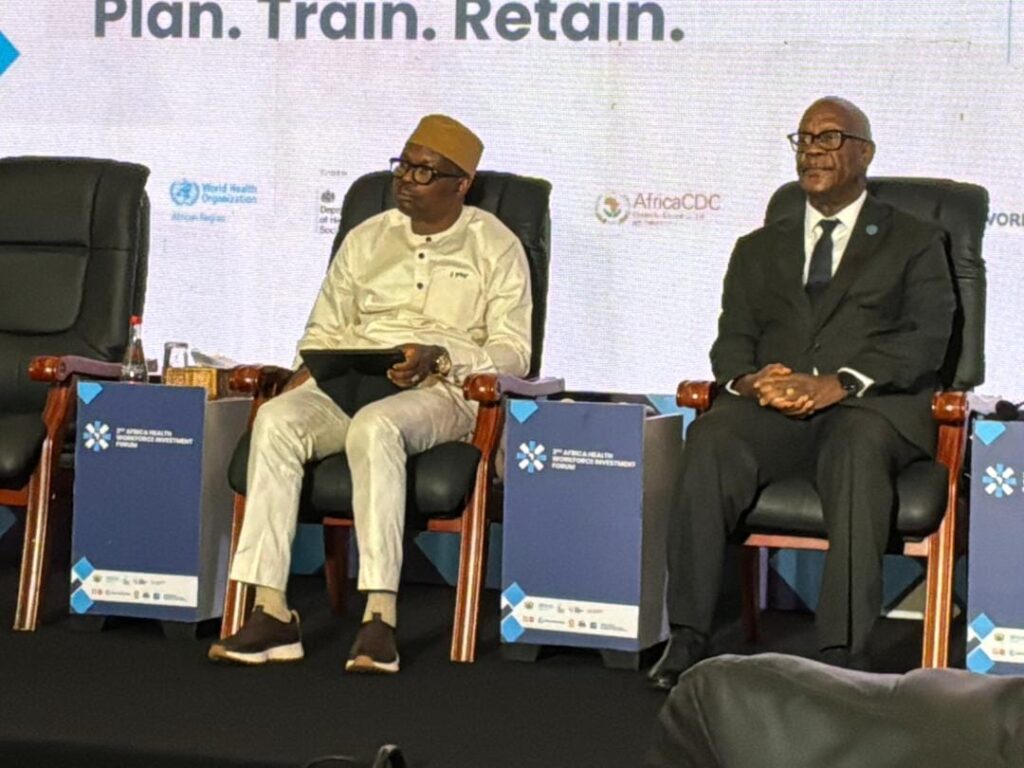
THE ROAD AHEAD
With the Fit to Prosper strategy now adopted and the workforce charter under review, attention will turn to how countries translate commitments into action. The cost of inaction, the World Bank warned in Accra, is ‘measured in lost lives and unrealised economic growth.’
For now, Ghana’s role as host has placed it at the centre of a continental conversation on whether Africa can build health systems that are both financially sustainable and human-centred.
The communique from the 6–8 May forum is expected in the coming days and should clarify how governments plan to bridge the gap between policy intent and workforce reality.
