
By Janet Oyeleye
Interior Minister Olubunmi Tunji-Ojo says recidivism in Nigeria’s custodial centres fell from 11,616 in 2023 to 1,382 in 2025, crediting rehabilitation programmes for the sharp decline.
The Federal Government has announced a dramatic reduction in the number of repeat offenders within the Nigerian Correctional Service, attributing the drop to intensified rehabilitation and reformation programmes implemented under the present administration.
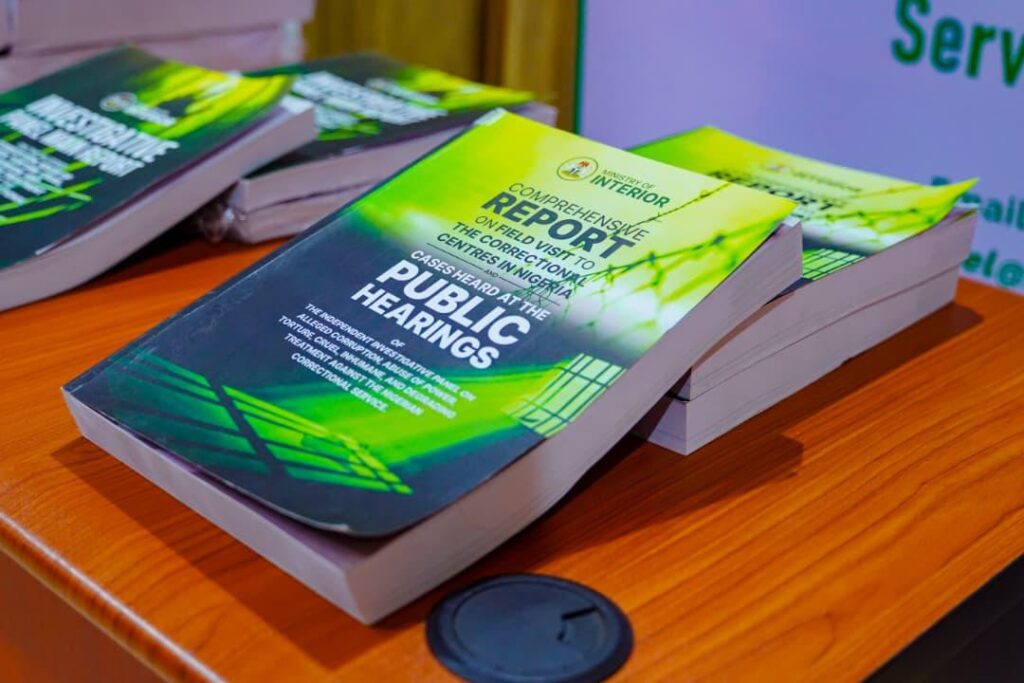
Minister of Interior, Dr. Olubunmi Tunji-Ojo, disclosed the figures on Wednesday during the presentation of an investigative report on the Nigerian Correctional Service in Abuja, describing the decline as a major indicator that the government’s correctional reforms are producing tangible results.
According to the minister, the number of inmates who returned to correctional facilities after previous convictions, known as recidivists, dropped significantly from 11,616 in 2023 when the current administration assumed office to 3,156 in 2024 and further declined to 1,382 in 2025.
”Recidivism was 11,616 when we came in in 2023, but in 2025 it came down to 1,382 recidivists. It means that our reformation programmes are bearing fruits. For us, not until recidivism gets to zero, we cannot say we have succeeded.”_
— Dr. Olubunmi Tunji-Ojo, Minister of Interior
Tunji-Ojo said the figures reflected the growing effectiveness of rehabilitation initiatives designed to equip inmates with vocational, educational, and life skills needed for successful reintegration into society.
The minister also highlighted recent correctional service statistics, revealing that 15,632 inmates were admitted into custodial centres across the country in May 2026, while 14,190 inmates were released during the same period under various legal and administrative arrangements.
The figures underscore the increasing pressure on correctional facilities even as authorities intensify efforts to decongest prisons and improve inmate management systems nationwide.
Observers say the reduction in recidivism could have far-reaching implications for public safety, criminal justice administration, and correctional policy, particularly as the government continues to pursue reforms aimed at transforming correctional centres from punitive institutions into facilities focused on rehabilitation and social reintegration.

The latest data is expected to strengthen confidence in ongoing reforms within the Interior Ministry and the Nigerian Correctional Service, while providing a benchmark for measuring future progress in the country’s criminal justice system.
