
By Hassan Hussain
The Dangote Group says Nigeria’s economic resilience depends largely on its ability to increase domestic production, strengthen local supply chains and reduce dependence on imports.
The Regional Director and Senior Adviser to the President, Dangote Group, Hajia Fatima Wali-Abdurrahman, stated this at the Dangote Special Day of the 21st Abuja International Trade Fair in Abuja.
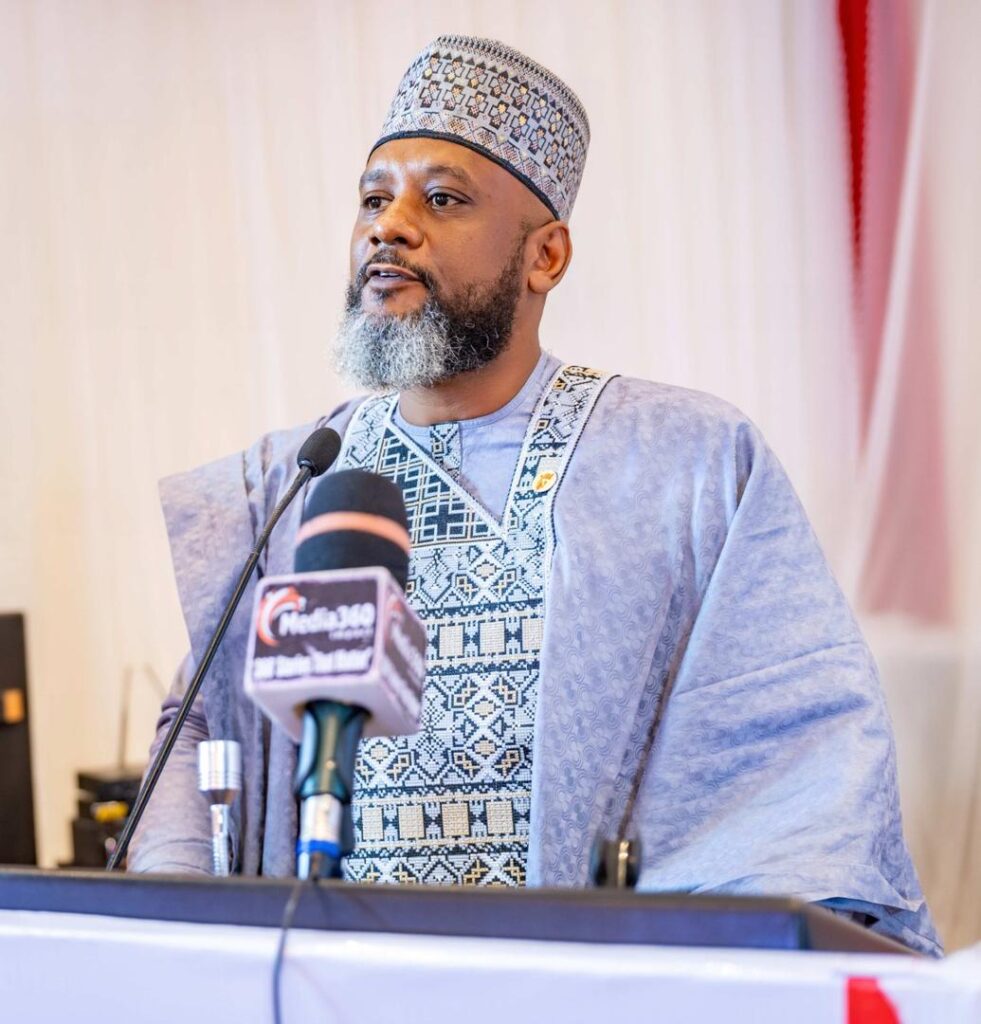
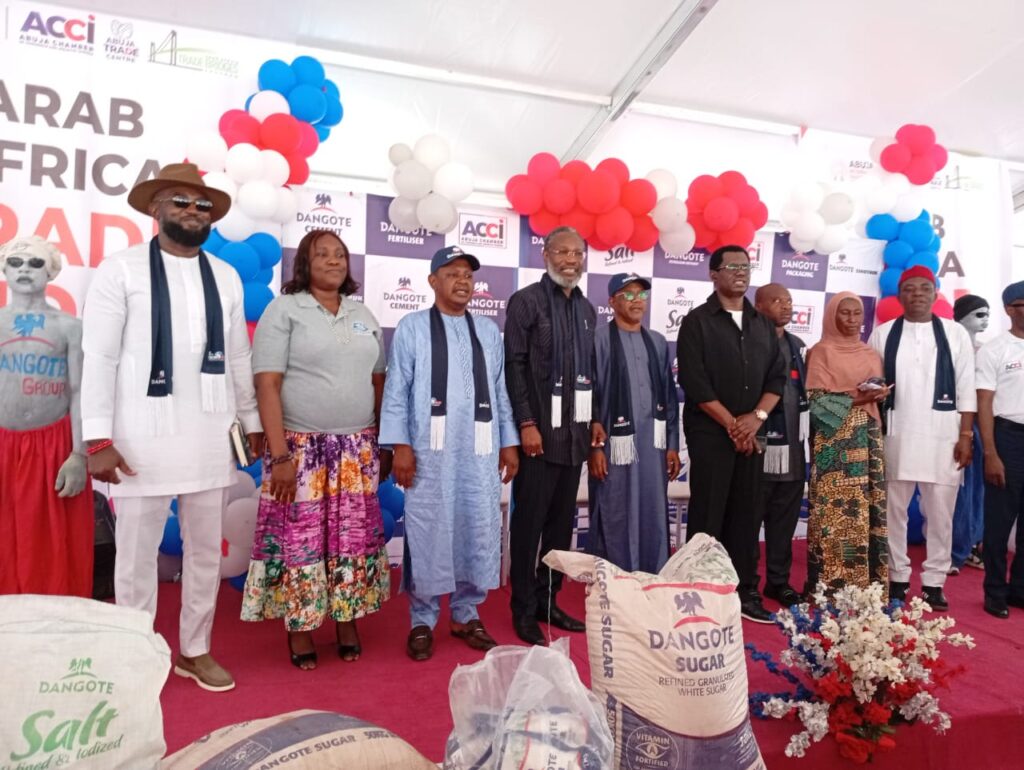
Represented by the Group’s General Manager, Bello Dan-Musa, Hajia Wali-Abdurrahman said the theme of the fair, “Resilience: Trade, Taxation and the Economy,” aptly reflects the realities confronting businesses and the Nigerian economy.
She said economic resilience goes beyond surviving difficult times, stressing that businesses must continuously adapt, innovate and invest in productive capacity.
“Nigeria’s economic resilience will ultimately depend on a fundamental choice: whether we continue to import what we can produce, or build the capacity to produce, compete and export,” she said.
The Regional Director said Dangote Group remained committed to expanding productive capacity in Nigeria and across Africa through investments in manufacturing, agriculture, energy and other critical sectors.
She explained that the group’s investments in cement, sugar, salt and seasoning, packaging, fertiliser, petrochemicals and petroleum refining were designed to create jobs, strengthen local supply chains and deepen value addition.
Hajia Wali-Abdurrahman noted that Dangote Cement had contributed to transforming Nigeria from a major cement-importing market into a significant producer and exporter, while supporting thousands of businesses across its value chain.
She said the group was also extending its Pan-African industrial vision to the energy sector, citing the commencement of construction of the Dangote East Africa Petroleum Refinery and Petrochemicals project in Lamu, Kenya.
On taxation, the Dangote Group executive described taxes as an essential part of the social contract, contributing to infrastructure, education, healthcare and other public services.
She, however, called for a predictable, transparent and efficient tax environment that would enable businesses to plan, invest and remain competitive.
“When businesses can plan with confidence, taxation strengthens public revenue without discouraging investment, innovation or competitiveness,” she said.
Hajia Wali-Abdurrahman also highlighted the Dangote Petroleum Refinery and Petrochemicals complex, describing it as one of Africa’s most significant industrial investments.
She said the refinery, with a current capacity of 700,000 barrels per day and an expansion plan to 1.4 million barrels per day under Vision 2030, would contribute to energy security, reduce dependence on imported refined petroleum products and conserve foreign exchange.
She added that the facility would create employment and opportunities for engineers, technicians, transporters, logistics companies, technology providers and small and medium-sized businesses.
The Regional Director further drew attention to the ongoing Initial Public Offering of Dangote Petroleum Refinery and Petrochemicals FZE, saying it was aimed at broadening participation in industrial wealth creation and deepening Nigeria’s capital market.
She said the public offer comprises 4.1 billion ordinary shares at 525 naira per share, with a minimum subscription of 10 shares, valued at 5,250 naira.
According to her, the offer opened on September 14 and is scheduled to close on October 13, 2026.
Hajia Wali-Abdurrahman said Dangote Group’s Vision 2030 seeks to transform Dangote Industries Limited into a 100-billion-dollar enterprise through industrial expansion, cross-border investment and greater African self-sufficiency.
She stressed that the vision was not only about corporate growth but also about producing what Africans consume, creating opportunities for young people, strengthening local supply chains and positioning African businesses to compete globally.
She commended the Abuja Chamber of Commerce and Industry for providing a platform that brings businesses, investors, policymakers and development partners together.
In a remark, the First Deputy President of the Chamber and Chairman of the 21st Abuja International Trade Fair, Professor Adesoji Adesugba, said its partnership with the Dangote Group is contributing significantly to the growth and visibility of the Abuja International Trade Fair, AITF.
Professor Adesugba said the AITF had evolved beyond an exhibition platform into an important economic marketplace connecting businesses, investors, government institutions, diplomatic missions, entrepreneurs and consumers.
He said the fair provides opportunities for businesses to showcase their products and services, access new markets, establish partnerships and strengthen commercial relationships.
“The value of the Trade Fair extends beyond the transactions that take place during the exhibition period. It creates a platform for businesses to build visibility, identify investment opportunities, access new customers and strengthen value chains,” he said.
The Chairman noted that the sustained participation and sponsorship of the Dangote Group had contributed to the visibility, vibrancy and growth of the Trade Fair.
He described the Group as an example of Nigerian enterprise and industrialisation, citing its investments in cement, fertiliser, agriculture, refining, petrochemicals and other strategic sectors.
“As we celebrate Dangote Special Day today, we recognise not only a valued exhibitor and sponsor, but also a strategic partner in the broader effort to promote Nigerian businesses and strengthen the country’s productive economy,” Adesugba said.
