
Regional bloc says credible statistics are key to tackling debt, food insecurity and climate challenges
*By Danjuma AMODU
DAKAR – The Economic Community of West African States, ECOWAS, has launched a renewed push to make reliable data the foundation of governance, economic planning and regional integration across West Africa.
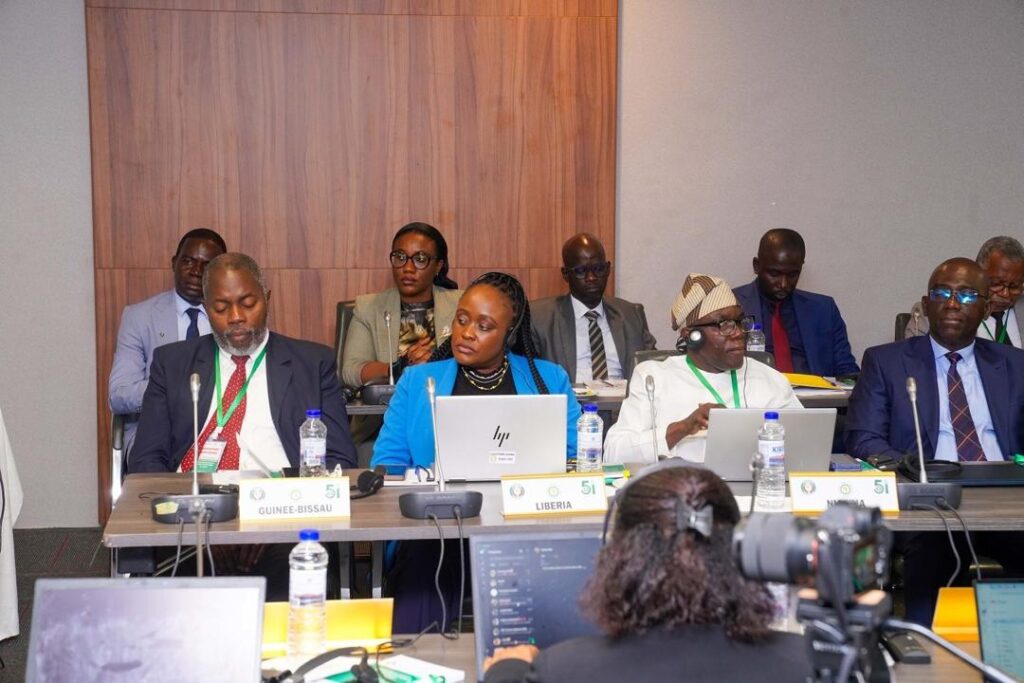
The call was made on Monday at the opening of the meeting of Directors-General of National Statistics Institutes, NSIs, of ECOWAS member states in Dakar, Senegal, where policymakers and statistical experts gathered to chart a new course for the region’s statistical system.
Opening the meeting, Senegal’s Minister of Economy, Planning and Cooperation, Allé Nar Diop, described data as the “lamp” that should illuminate government decisions.
He said sustainable development and effective governance cannot be achieved without credible, harmonised and timely statistics, and urged member states to strengthen their statistical institutions and embrace innovation.
The 3-day meeting is examining strategies to harmonise statistical methodologies across ECOWAS countries, improve data quality and accessibility, accelerate digital transformation in statistical production, and reinforce regional cooperation in line with the ECOWAS Vision 2050 agenda.
Participants are also reviewing measures to build a more resilient regional statistical system to support policymaking in critical sectors including health, education, agriculture, trade, security and climate resilience.
The discussions come amid mounting pressure on West African governments to base policies on verifiable evidence as the region grapples with rising public debt, food insecurity, inflation, unemployment and the impacts of climate change.
“Data is the lamp that should illuminate government decisions. Sustainable development cannot be achieved without credible and harmonised statistics.”
– Allé Nar Diop, Senegal’s Minister of Economy, Planning and Cooperation
Experts at the meeting noted that robust statistical systems are essential for monitoring progress toward national development plans, the African Union’s Agenda 2063 and the United Nations Sustainable Development Goals, SDGs.
They also highlighted persistent challenges facing many West African countries, including weak statistical infrastructure, inadequate funding, limited technological capacity and inconsistencies in data collection methods.
To address these gaps, ECOWAS said it has, through its Regional Statistical Programme, been pursuing the harmonisation of statistical standards, stressing that comparable and credible data are indispensable for economic integration, cross-border trade, investment planning and effective implementation of regional policies.
The Dakar gathering is expected to produce recommendations aimed at deepening cooperation among national statistical agencies, improving the production and sharing of official statistics, and enhancing governments’ capacity to respond to emerging regional challenges through data-driven decision-making.
The meeting is seen as a significant step toward building a stronger regional statistical architecture to support evidence-based governance and accelerate sustainable development across West Africa.
