
Founder Tim Akano funds ₦100m pilot, says skills training key to security and development
By Hassan Hussain
The Founder of the Almajiri-to-Tech and Out-of-School Children Foundation, Mr Tim Akano, has called for greater support to expand initiatives aimed at equipping vulnerable children with technical and vocational skills for self-reliance.
Mr Akano made the call in Abuja at the graduation and prize-giving ceremony for the first batch of beneficiaries of the Almajiri-to-Tech and Out-of-School Children Initiative, organised by the Foundation in partnership with New Horizons Nigeria, a franchise of New Horizons Worldwide, the world’s largest ICT and technical training institute headquartered in the United States.
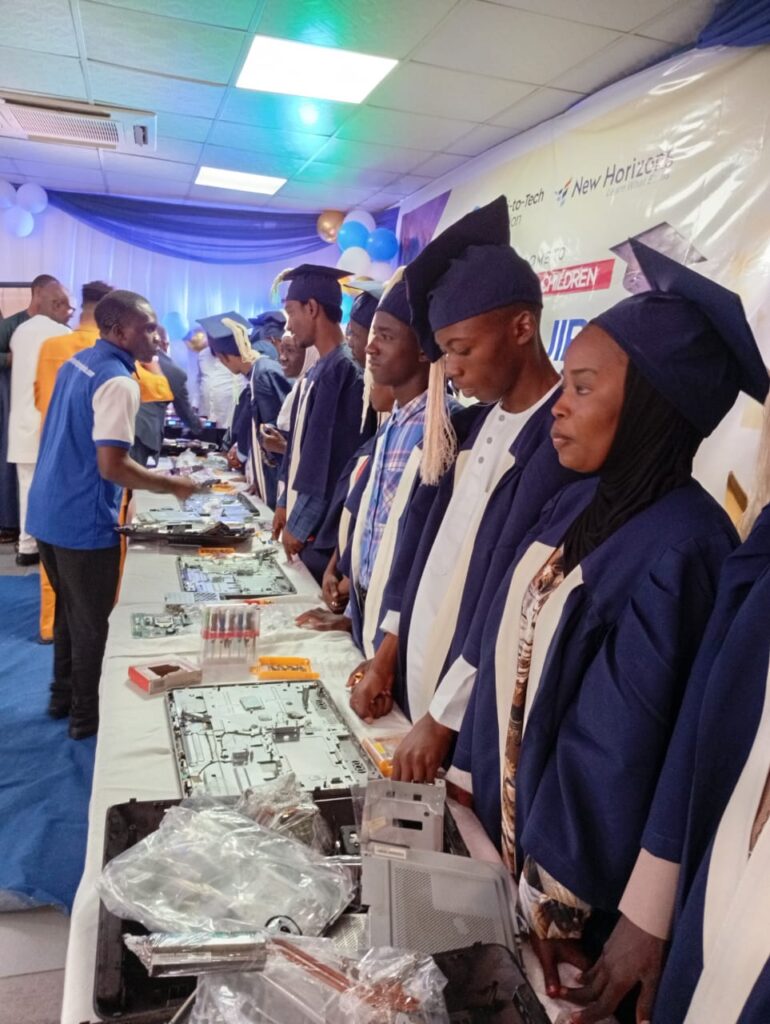
He described the graduation as a major milestone in the Foundation’s mission to empower Almajiri and out-of-school children through practical skills acquisition, character development, entrepreneurship and mindset reorientation.
“If urgent action is not taken, Nigeria could have as many as 100 million Almajiri and out-of-school children by 2050.”
— Mr Tim Akano, Founder, Almajiri-to-Tech and Out-of-School Children Foundation

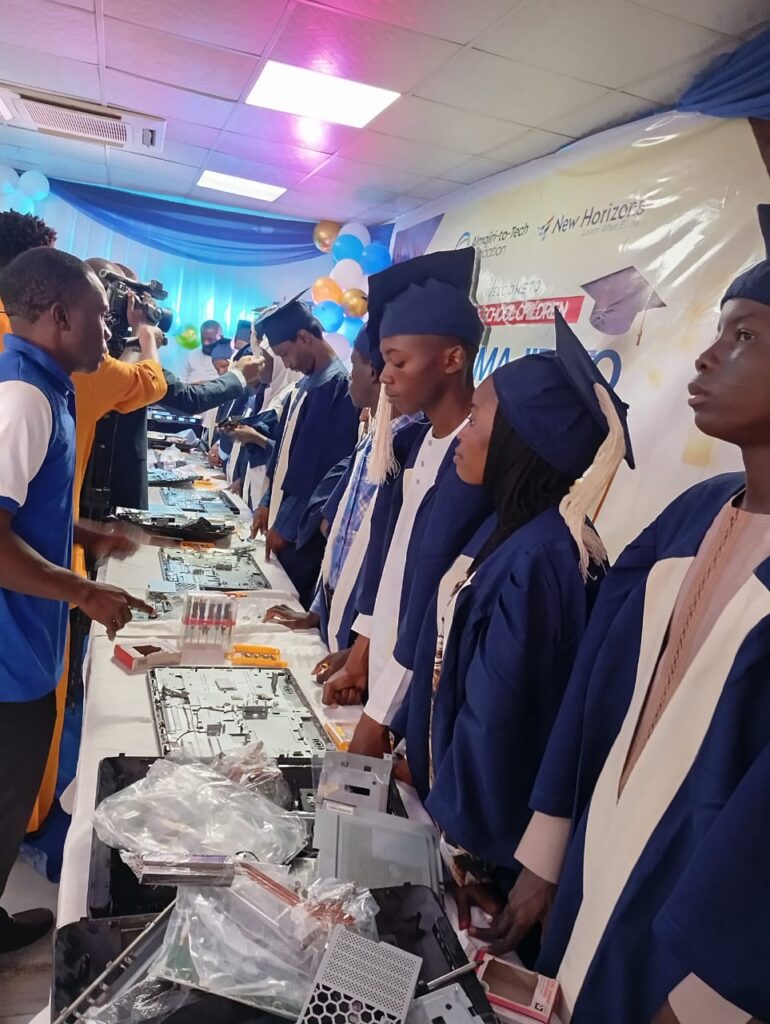
According to him, after six months of intensive hands-on training, the pioneer beneficiaries acquired skills in mobile phone repair, laptop repair, inverter battery construction, electric fan repair and table lamp repair.
Mr Akano said the three best graduating students would be established as technician micro-business owners in Abuja and presented with New Horizons Computer and Electronics Technician Certificates.
Speaking on the inspiration behind the project, the Foundation’s founder expressed concern over the growing number of out-of-school children in Nigeria, warning that without intervention, the figure could balloon in the coming decades.
He said the programme was conceived after years of studying the trend and observing that previous interventions had yielded little result.
Mr Akano explained that he personally funded the pilot project at a cost of over ₦100 million, providing participants with daily stipends, meals, uniforms, training materials and professional instructors to encourage consistent attendance throughout the six-month programme.
He noted that the strategy recorded almost 100 per cent attendance, with participants successfully learning to repair electronic devices, build computers and even construct robots, demonstrating that genuine empowerment requires sustained investment rather than one-off interventions.
Mr Akano stressed that addressing the challenge of out-of-school children would also contribute to improving national security and human development, noting that many youths recruited into criminal activities are drawn from the streets.
He appealed to governments, corporate organisations and well-meaning Nigerians to support the initiative, particularly in funding workshops, tools and business spaces needed to establish graduates as micro-business owners.
The Foundation says expanding the programme will enable more vulnerable children to acquire lifelong skills, become economically productive and contribute positively to national development.
In a remark, Former Inspector-General of Police, MD Abubakar, called on the Federal Government to strengthen the Almajiri Commission and work with state governments to address challenges associated with the Almajiri system in Nigeria. He said the issue should be viewed as a national concern rather than one limited to any region, stressing that out-of-school children exist across the country.
“Children should not be left on the streets. This is evidence of a systemic breakdown that requires urgent attention and effective intervention.”
— MD Abubakar, Former Inspector-General of Police
He commended individual initiatives aimed at supporting vulnerable children, noting that the government should build on such efforts by fulfilling its constitutional and institutional responsibilities.
The former IGP said the establishment of the Almajiri Commission demonstrates the government’s recognition of the problem, adding that the commission should collaborate with state governments to provide lasting solutions.
One of the partners and the Chief Imam of Al-Habibiyyah Islamic Society, Imam Fuad Adeyemi, stressed the need for philanthropists and community leaders to support initiatives aimed at transforming the lives of Almajiri children through education and vocational skills acquisition.
He described the initiative as a practical intervention that has provided hope for many out-of-school children and vulnerable youths who previously depended on begging for survival.
The Islamic cleric expressed satisfaction with the quality of training received by the participants, noting that beyond classroom learning, the beneficiaries had already begun applying the skills they acquired.
On the Almajiri system, Imam Adeyemi traced its current challenges to the collapse of the traditional Islamic endowment, known as Waqf, which historically funded the education and welfare of children. He explained that the system deteriorated following colonial reforms that weakened the traditional structures responsible for managing Islamic educational endowments.
The Chief Imam, who described himself as a proud product of the Almajiri system, said countries such as Saudi Arabia, Malaysia, Indonesia and Turkey had successfully reformed similar systems, unlike Nigeria where many Almajiri children remain neglected.
He urged wealthy individuals and organisations to invest in programmes that create opportunities for young people to become productive members of society rather than depend on charity.
Imam Adeyemi also announced that Al-Habibiyyah Islamic Society would commence a similar skills development programme within the next one month through an exchange partnership with New Horizons. He explained that facilities had already been secured, while graduates of the current programme would serve as trainers under the supervision of New Horizons to ensure the sustainability of the initiative.
Speaking on behalf of the graduating students, Miss Fatima Umar expressed profound appreciation to the organisers and sponsors of the programme for equipping them with life-changing technical and vocational skills.
She commended the foundation and its partners for providing free training in the repair and maintenance of electronic devices, including mobile phones, laptops, projectors, microwaves and other appliances.
She described the initiative as a transformative opportunity that had given beneficiaries the knowledge and practical skills needed to become self-reliant and contribute meaningfully to society.
Miss Umar paid special tribute to the sponsor of the programme, Mr. Tim Akano, describing him as a visionary committed to investing in the potential of young people through education and skills development.
