
Kogi Central senatorial primaries hold today after House of Reps primaries last week; observer says Ajaka nomination would boost Tinubu’s 2027 prospects in Kogi East
By DANJUMA AMODU
Kogi politics has never been short on drama, but Murtala Yakubu Ajaka’s public apology to Governor Yahaya Bello and his recent rapprochement with the All Progressives Congress has stirred unease across the state, particularly among his Igala base. The same man who spearheaded the opposition charge against the APC in 2023 now appears to be walking back through the party’s front door. For some supporters it feels like betrayal. For others it is politics as it is — interest-driven, seasonal and unforgiving.
Ajaka’s trajectory has been defined by boldness and deep national connection. A former APC chieftain with national influence, he was instrumental in building the party’s structure across Kogi before President Bola Tinubu’s ascension to the presidency. After being denied the 2023 governorship ticket, he moved to the Social Democratic Party, where he emerged as flagbearer and mounted a formidable challenge against the APC in the gubernatorial election. He lost, but the contest elevated him from a state player to a national figure. His campaign was aggressive, well-funded and sustained well after the polls, a rarity in a political climate where most opposition candidates disappear once the votes are counted.
That visibility came at a heavy cost. Throughout the election cycle and its aftermath, Ajaka’s supporters reported persistent persecution — arrests, intimidation and political exclusion across parts of Kogi East. The tension peaked with the killing of Kabir Bala, widely known as “Okwo”, who was shot dead on June 22, 2023, during an operation by a joint security task force in Ejule.
Violence escalated again in the early hours of Tuesday, November 7, 2023, with a deadly attack on the Anyigba residence of Ibrahim Jubril, the Social Democratic Party campaign director for Kogi State. The raid left four people dead, including a police officer, in an incident allegedly carried out by policemen.
Those incidents deepened mistrust between rival camps and left scars that have not fully healed. Ajaka himself has consistently commiserated with families who lost loved ones during the period, framing their sacrifice as part of the broader struggle for political inclusion and fairness in Kogi.
Yet even as his supporters bore the brunt of the fallout, Ajaka never fully severed ties with the APC at the federal level. He maintained discreet engagements in Abuja, a signal that the SDP platform was for him a vehicle rather than a destination. The recent apology and move back to the APC is therefore being read by many as the conclusion of a prewritten script rather than a sudden U-turn. Critics among the Igala electorate see it as opportunism that undermines the trust of thousands who stood with him against the ruling party and now feel abandoned.
What distinguishes Ajaka’s political survival, however, is the role of a few loyal figures who stayed consistent when the stakes were highest. Besides his wider support base, two individuals whose support played out strongly at the social media level are Opaluwa Omera and Isaiah Ijele. They kept the war of opposition on social media within Ajaka’s circle. Unlike the “data boys” who shift allegiance with the wind, both men remained steadfast through the turbulence, providing digital presence and engagement. Their consistency has earned them respect even among opponents, and it is this kind of political capital that Ajaka will likely rely on as he navigates his return via the senatorial platform.
The Kogi Central Senatorial primaries are holding today, with all the gladiators present. Those on the ground include Murtala Yakubu Ajaka, alongside other contenders such as Eric Onoja “Erico”, Abdulkareem Asuku “Echoco”, and other aspirants. This comes days after the House of Representatives primaries were concluded. Party officials say today’s outcome will position the APC ahead of the 2027 elections.
An observer noted that the decision to constitute a reconciliation committee for Ajaka’s return, and the caliber of its members, underscores the value the APC places on him and points to what is likely to emerge from today’s primaries. According to him, the committee is made up of respected figures who are both mentors to Ajaka and central to the APC government in Kogi. He said Ajaka was right to apologize in the spirit of party unity, describing it as a necessary step toward reintegration and cohesion within the party structure.
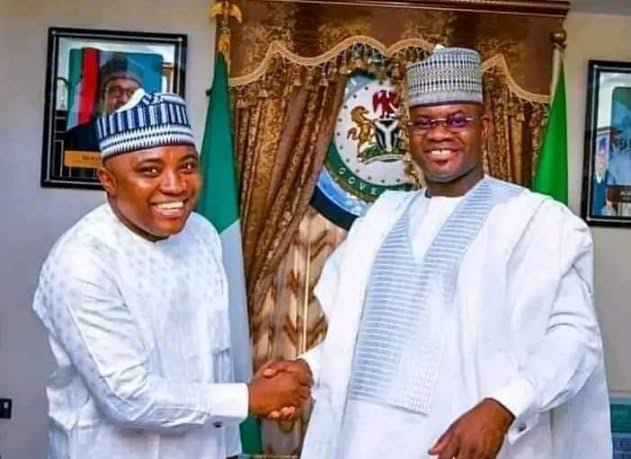
The source added that if Ajaka secures the senate nomination, it would be a plus for President Tinubu’s 2027 campaign. Ajaka’s supporters in Kogi East, he argued, could enable PBAT to replicate the 2023 outcome and still win Kogi State — a result many believe came from Ajaka’s influence, as he supported the entire local government areas in the state prior to his defection to the SDP with vehicles and campaign materials.
Kogi’s political calculus has always favoured pragmatism over sentiment. In a state where power rotates between the three senatorial zones and where access to federal patronage often determines relevance, staying outside the ruling structure can mean political irrelevance. Ajaka’s camp insists that the return is not surrender but strategy. If the goal is to serve Kogi people from within the corridors of power, then aligning with the party at the centre may be the only viable route. As one ally put it, “In politics there are no permanent friends and no permanent enemies. Interest is supreme.”
What has sustained Ajaka’s relevance beyond the election cycle is his philanthropic footprint. From scholarships to medical interventions and community infrastructure, his interventions have cut across party lines. In a state grappling with poverty and insecurity, such gestures translate into goodwill that outlives party affiliation. This philanthropy also explains his rise to national prominence outside Kogi. Unlike many state politicians whose influence ends at the state border, Ajaka has cultivated networks in Abuja and beyond, positioning himself as a figure with both grassroots reach and federal access.
Politicians, like footballers and, as some would say, beautiful women, have their season. Knowing when to move, when to concede and when to re-enter the pitch often separates career politicians from one-season contenders. Ajaka appears to be reading the season. If his return is a fulfilment of an earlier understanding or a tactical step towards realising his ambition to serve Kogi, then it fits within the logic of Nigerian politics where party lines are fluid and loyalty is transactional.
The implications for Kogi are twofold. For the APC, Ajaka’s return strengthens its hold in the state and potentially neutralises a restive opposition bloc ahead of 2027. For the Igala political establishment, it raises questions about unity and representation. Will they consolidate around another figure, or will Ajaka retain his hold on that constituency despite the party switch? For Ajaka himself, the challenge will be rebuilding trust while managing expectations. His supporters want assurance that this is not capitulation but a calculated step towards influence and service.
Whether this is homecoming or political repositioning, one thing is clear: Murtala Yakubu Ajaka remains one of Kogi’s most consequential political actors. His next move will not only shape his own future but could also redefine the balance of power in the state. And in Kogi, as in Nigerian politics generally, the only constant is change — driven not by ideology, but by interest.
