
Regional bloc launches investment drive in Accra to mobilise public and private capital for rice self-sufficiency, calling food sovereignty an economic imperative
By DANJUMA AMODU
Determined to end decades of costly dependence on imported rice, the Economic Community of West African States has set a 2035 deadline for regional self-sufficiency and convened financiers, governments and agribusiness leaders in Accra to unlock the investments needed to transform the staple crop into a pillar of economic sovereignty.
The two-day Regional Round Table on Investment in the Rice Sector, organised by ECOWAS through its Department of Economic Affairs and Agriculture with support from the World Bank and the African Development Bank, seeks to unlock public, private and blended financing required to implement national and regional rice development plans.
The gathering comes at a critical moment for West Africa, a region where rice has become a staple food for millions but where domestic production continues to lag behind demand, forcing countries to spend billions of dollars annually
on imports.
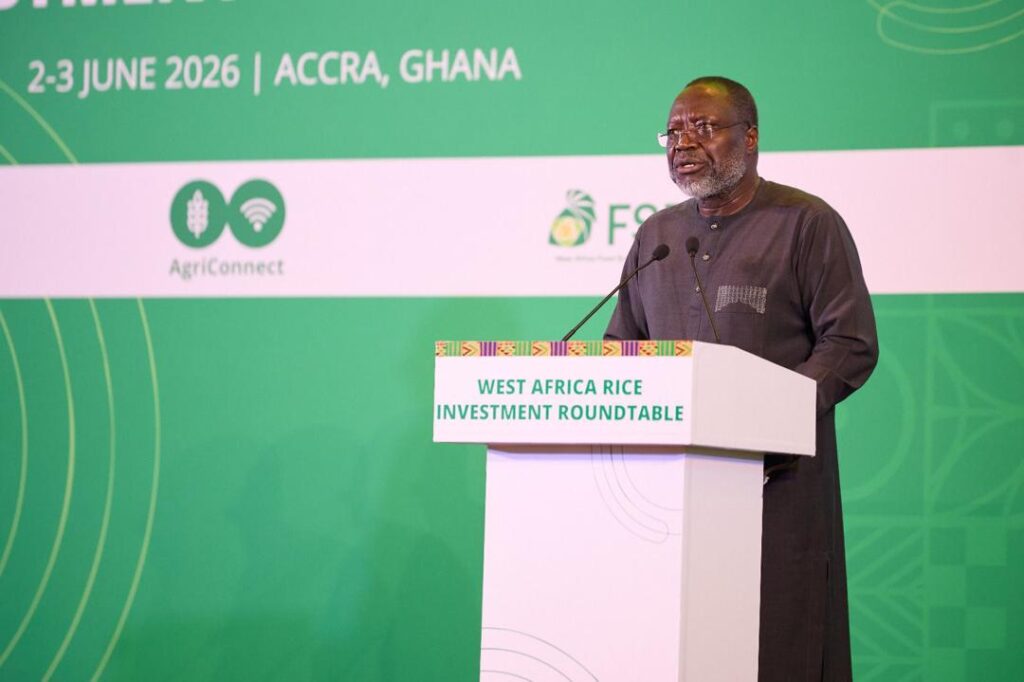
Opening the roundtable on behalf of Ghanaian President John Dramani Mahama, Vice President Jane Naana Opoku-Agyemang said the challenge before the region transcends agriculture and touches on broader issues of economic sovereignty and sustainable development.
“Beyond rice, this meeting is about economic transformation, regional integration and Africa’s capacity to achieve self-sufficiency with dignity.”
— Jane Naana Opoku-Agyemang, Vice President of Ghana
She stressed that the quest for rice self-sufficiency is fundamentally linked to Africa’s ability to transform its economies, deepen regional integration and build resilience against global supply disruptions.
For decades, West African nations have struggled with the paradox of possessing vast arable land, favourable climatic conditions and a large agricultural workforce, yet remaining heavily dependent on imported food. Global shocks including the COVID-19 pandemic, supply chain disruptions, geopolitical conflicts and rising food prices have exposed the vulnerability of relying on external markets to feed growing populations.
The urgency has become more apparent as food inflation continues to exert pressure on households across the region.
In his remarks, President of the ECOWAS Commission, Omar Alieu Touray, described the initiative as a defining moment in the bloc’s efforts to attain food sovereignty.
“Our ambition is to establish competitive, inclusive and sustainable agri-food systems that strengthen food sovereignty, create jobs and promote shared prosperity while achieving regional self-sufficiency in rice by 2035.”
— Omar Alieu Touray, ECOWAS Commission President
He noted that the roundtable must go beyond declarations and serve as a catalyst for concrete investments and actions capable of transforming the rice value chain across member states.
The meeting also featured contributions from Ghana’s Minister of Food and Agriculture, Eric Opoku, Deputy Finance Minister Thomas Nyarko Ampem, World Bank Vice President for Global Environment, Guangzhe Chen, and AfDB Director of Agricultural Finance and Rural Development, Richard Ofori-Mante.
A major highlight was the presentation of the “Vision for Rice Self-Sufficiency in West Africa by 2035” by Kalilou Sylla. The vision outlines a comprehensive strategy to boost rice production, improve seed systems, expand irrigation infrastructure, strengthen mechanisation, enhance processing capacity and improve market access across the region.
Experts say achieving self-sufficiency will require unprecedented levels of investment in agricultural infrastructure, research, climate-smart farming techniques and value-chain development. It will also depend on stronger collaboration among governments, development partners and private investors.
The initiative is expected to build on existing regional agricultural frameworks while addressing long-standing bottlenecks that have limited productivity and competitiveness.
For millions of farmers across West Africa, the success of the programme could translate into increased incomes, expanded market opportunities and improved livelihoods. For governments, it represents a strategic opportunity to reduce import bills, conserve foreign exchange and strengthen economic resilience.
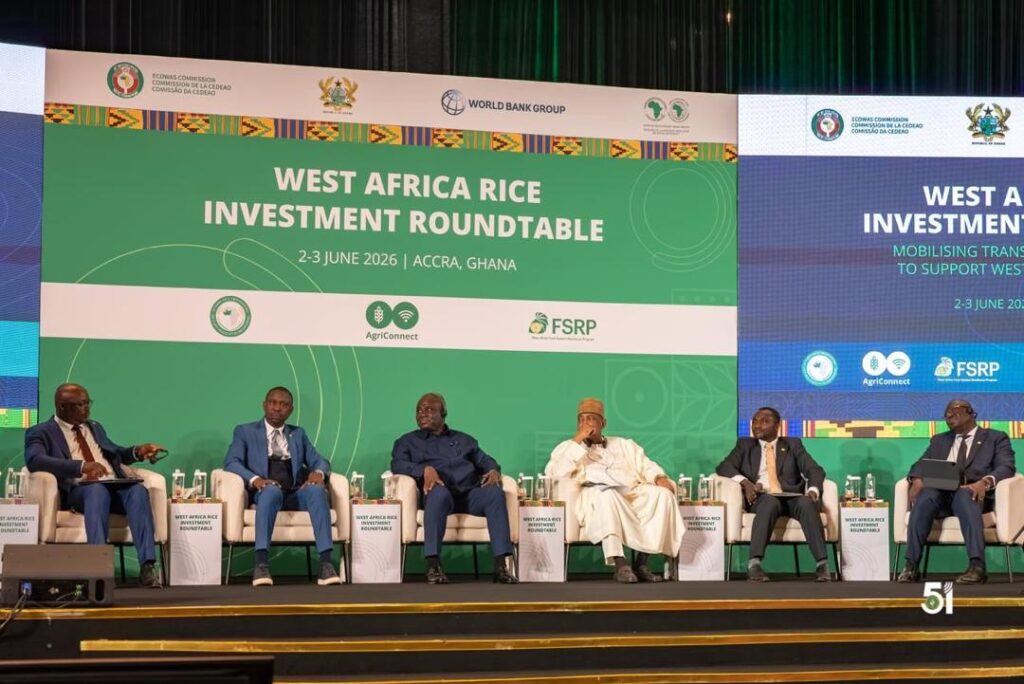
As discussions continue in Accra, stakeholders agree that the region’s ability to feed itself is no longer merely an agricultural objective but an economic and strategic imperative. The roundtable therefore marks not only a financing exercise but a bold declaration of West Africa’s determination to take greater control of its food future and reduce its dependence on imported staples.
If successful, the 2035 rice self-sufficiency agenda could become one of the most consequential agricultural transformation programmes in the history of West Africa, reshaping food systems and reinforcing the region’s drive towards economic integration and sustainable development.
