
By Danjuma Amodu
Nigeria is putting about $1 billion behind its forests in a new 10-year push to restore degraded land, create jobs and boost climate resilience, with the European Union, Germany and the FAO backing the plan as part of a broader economic agenda.
Launched Tuesday in Abuja, the Securing Nigeria’s Forest Future (SNFF) Country Package targets the restoration of 2 million hectares, a 20 per cent cut in deforestation, 1.5 million green jobs, and improved livelihoods for more than 5 million Nigerians.
The Minister of Environment, Balarabe Lawal, said the initiative marks a shift from fragmented interventions to a coordinated investment framework that brings together government, private capital, development partners and communities.
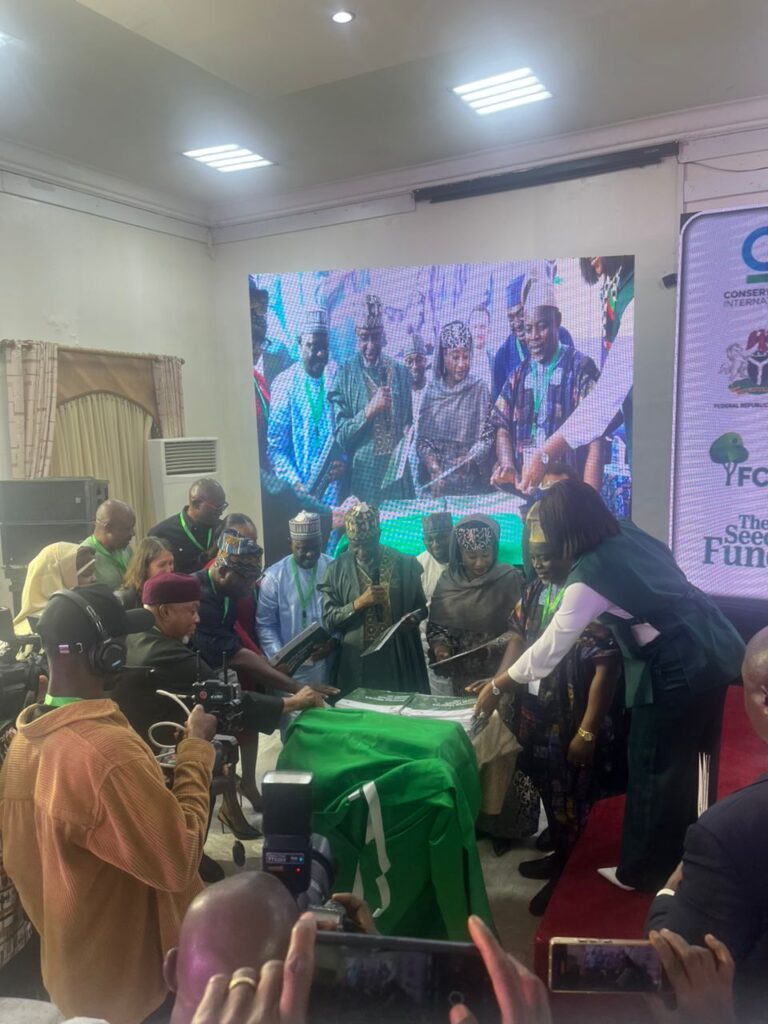
“Government funding alone cannot deliver the scale of intervention required,” Lawal said. “Private investment, blended finance and carbon finance are essential to the success of this strategy.”
Under SNFF, Nigeria aims to mobilise approximately $1 billion in blended finance. The plan prioritizes sustainable forest management, forest-based value chains, and benefits for women and young people in the emerging green economy.
The European Union said Nigeria’s forest agenda must be linked to agriculture, trade and economic development. EU Head of Partnerships, Massimo De Luca, warned that how commodities are produced and land is managed will increasingly determine market access.
He cited the EU Deforestation Regulation as both a challenge and opportunity for Nigeria’s cocoa sector. “Better forest governance, land-use planning, farm-level traceability and reliable geospatial data will help ensure Nigerian cocoa is not associated with deforestation,” De Luca said.
The EU also highlighted its support for Gashaka Gumti and Cross River National Parks, and a €700 million commitment to the Great Green Wall Initiative to combat desertification across the Sahel.
Germany called for stronger institutions and predictable policies to attract private investment. Its representative said investors will need secure land rights, reliable data, access to finance and incentives. Germany pledged continued support for Nigerian-led solutions and efforts to mobilise more public and private financing.
The FAO stressed that forests cannot be separated from food and agriculture. Speaking for FAO Representative Dr. Hussein Gadain, the organisation said forests are tied to food, water, income and resilience for millions, especially forest-dependent communities.
FAO backed SNFF’s approach of combining conservation with sustainable land management, agroforestry and deforestation-free supply chains. It also pledged support to help Nigeria develop investment-ready programmes and access climate funds such as GEF, Green Climate Fund and Adaptation Fund.
Lawal acknowledged that implementation will be the real test. He listed clear institutional roles, bankable projects, mobilised resources, technical capacity and monitoring as critical.
He urged MDAs to treat SNFF as a cross-cutting economic and climate priority, and said state governments and communities will be central since most work will happen at subnational level.
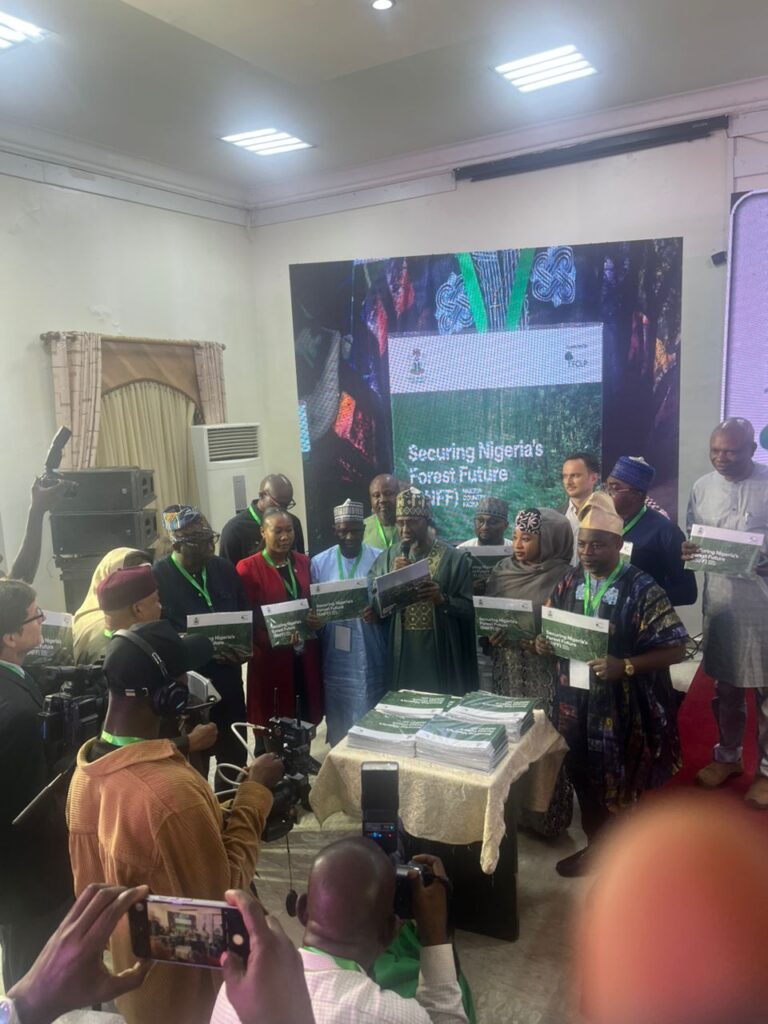
The Ministry of Environment, through its Department of Forestry, will also strengthen forest monitoring to track deforestation, degradation and restoration for national climate reporting.
With targets now set, the success of SNFF will depend on whether investment reaches communities, degraded landscapes are restored, and sustainable production becomes commercially viable.
The launch positions Nigeria’s forests at the centre of a bigger economic question: can the country protect natural resources while creating jobs, securing food systems, attracting investment, and keeping agricultural exports competitive in a changing global market.
