
By Danjuma Amodu
ABUJA- The Economic Community of West African States (ECOWAS) has launched a historic regional push to dismantle structural barriers that have kept women largely underrepresented in governance, with leaders declaring that stronger democracies and sustainable development cannot be achieved without the full participation of women.
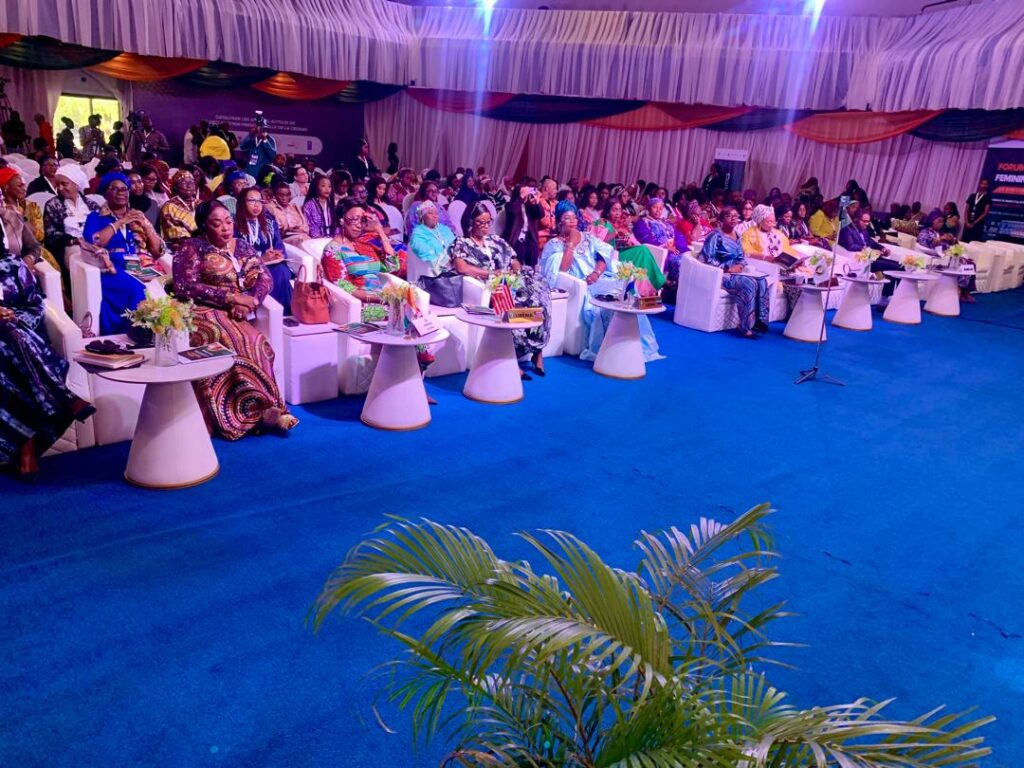
The declaration came at the opening of the High-Level Forum on Strengthening the Representation of Women in Political Leadership in the ECOWAS Region held in Abuja on Thursday. Regional leaders, ministers, parliamentarians, development partners and gender advocates gathered to chart a practical pathway towards greater inclusion of women in political decision-making.
The forum followed the adoption by the ECOWAS Authority of Heads of State and Government of the Presidential Declaration on Strengthening the Representation of Women in Political Leadership in the ECOWAS Region at the Summit on the Future of Regional Integration in West Africa held recently in Freetown, Sierra Leone.
The declaration, described by ECOWAS as a major legacy of its 50th anniversary celebration, seeks to create an enabling environment for women to compete for elective positions, participate actively in political parties and occupy leadership roles across the region.
Speaking at the forum, Vice President of the ECOWAS Commission, Mrs. Damtien Tchintchibidja, said the region had reached a defining moment in its democratic journey, stressing that the future strength of West Africa depended on ensuring that women and men alike participate fully in shaping governance.
“From representation to influence. From isolated achievement to collective power. From declarations to delivery.”
— Ahunna Eziakonwa, UN Assistant Secretary-General & UNDP Regional Director for Africa
According to her, the initiative was conceived as part of the legacy of ECOWAS at 50, not only to celebrate five decades of regional cooperation but also to establish a foundation for a new phase of integration where leadership reflects the talents, experiences and aspirations of all citizens.
She explained that the adoption of both the Pact for the Future of Regional Integration and the Presidential Declaration demonstrated the commitment of West African leaders to building a more inclusive and people-centred community anchored on ECOWAS Vision 2050.
“The strength of our democracies, the quality of our governance and the future of our development depend on the ability of all citizens, women and men alike, to participate fully in shaping the destiny of our region,” Tchintchibidja said.
Despite progress in democratic governance across West Africa, the ECOWAS Vice President said the persistent exclusion of women from political leadership remains one of the major weaknesses of the region’s democratic systems.
She noted that women constitute more than half of the population and contribute significantly to business, peacebuilding, innovation, family and community development, yet their representation in institutions where key decisions are taken remains far below their contributions to society.
Tchintchibidja said women occupy only about 15.5 per cent of parliamentary seats across West Africa, a figure significantly below the African average of 25 per cent and the global average of 26.5 per cent.
She acknowledged that some ECOWAS member states had introduced gender quotas, parity laws and other reforms aimed at expanding political opportunities for women but said progress remained uneven.
The Vice President stressed that women’s political inclusion was not only about correcting historical imbalance but also about unlocking economic potential. Citing IMF and World Bank data, she said closing gender gaps could increase economic output by 10 to 35 per cent, while countries lose approximately 14 per cent of their human capital wealth when women cannot fully participate.
The ECOWAS declaration provides a regional framework requiring member states to strengthen constitutional, legal and policy measures that support women’s political participation. It also called on political parties to review nomination processes and provide women genuine opportunities to contest elections.
Other areas covered include investment in leadership development, mentorship, capacity building, and addressing political financing — identified as one of the biggest obstacles facing female candidates.
Nigeria’s Minister of Women Affairs and Social Development, Hajiya Imaan Sulaiman-Ibrahim, also called for far-reaching reforms, describing inclusive leadership as essential to stronger democracy and sustainable development. She reaffirmed Nigeria’s commitment to working with ECOWAS, UNDP and other partners to translate the declaration into measurable action.
The United Nations Development Programme (UNDP) said it would support implementation through new initiatives. UN Assistant Secretary-General and UNDP Regional Director for Africa, Ahunna Eziakonwa, disclosed that women occupy only 27 per cent of parliamentary seats across Africa, 9 per cent of political party leadership positions, and 24 per cent of cabinet posts.
“It is really not to ask women to adapt to the unequal political systems that they face, but really to transform those systems,” she said.
Eziakonwa announced the establishment of the African Facility for Women in Political Leadership and the upcoming launch of the African Academy for Women’s Political Leadership in Kigali, Rwanda.
She urged stakeholders to develop a practical action plan to address financial, institutional, social, cultural and digital barriers facing women in politics, and called for greater involvement of men as allies.
For Tchintchibidja, the Abuja gathering represents both a regional commitment and a defining moment as she concludes her tenure as Vice President of the ECOWAS Commission.
“History seldom remembers those who merely recognised the need for change; instead it remembers those who had the courage to make it happen,” she said.
The forum ended with a renewed call for West African governments, political parties, civil society groups and development partners to move from commitments on paper to concrete actions.
