
Governor Babagana Zulum advances plans to reopen the strategic Baga–Chad waterway, aiming to revive cross-border trade and restore livelihoods across the Lake Chad Basin after years of insurgency-induced closure.
By DANJUMA AMODU
The long-abandoned water route between Baga in northern Borno State and neighbouring Chad may soon be reopened as Governor Babagana Umara Zulum intensifies efforts to restore commerce and economic activity across the Lake Chad region.
During a visit to Baga on Saturday, Zulum held high-level consultations with military commanders and security officials on plans to clear the strategic waterway, which has remained largely inaccessible for years due to insurgency and insecurity.
The governor said discussions focused on practical steps to secure the route and facilitate the movement of goods and people between Nigeria and Chad, a move that could significantly boost livelihoods in communities devastated by years of conflict.
“Our visit to Baga was to interface with the Nigerian military to discuss the modalities for clearing the waterway from Baga to the Republic of Chad,” Zulum told journalists after the meeting.
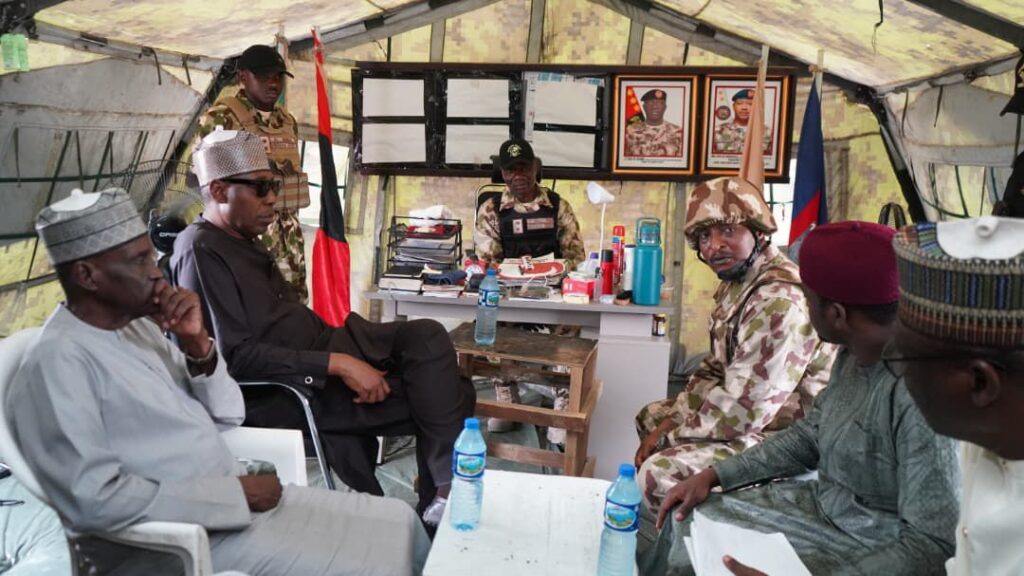
He expressed optimism that the clearance operation would commence soon, noting that the Nigerian and Chadian governments were already collaborating on arrangements to ensure the smooth movement of commodities across the border.
The proposed reopening is viewed as a major economic lifeline for communities around Lake Chad, where fishing, farming, and cross-border trade have historically sustained thousands of families. The disruption of these activities by insurgent violence contributed to economic decline, displacement, and widespread humanitarian challenges across the region.
Security experts and local stakeholders say restoring the route could reconnect markets, lower transportation costs, and encourage the return of legitimate commercial activities that once flourished between Nigeria, Chad, Niger, and Cameroon.
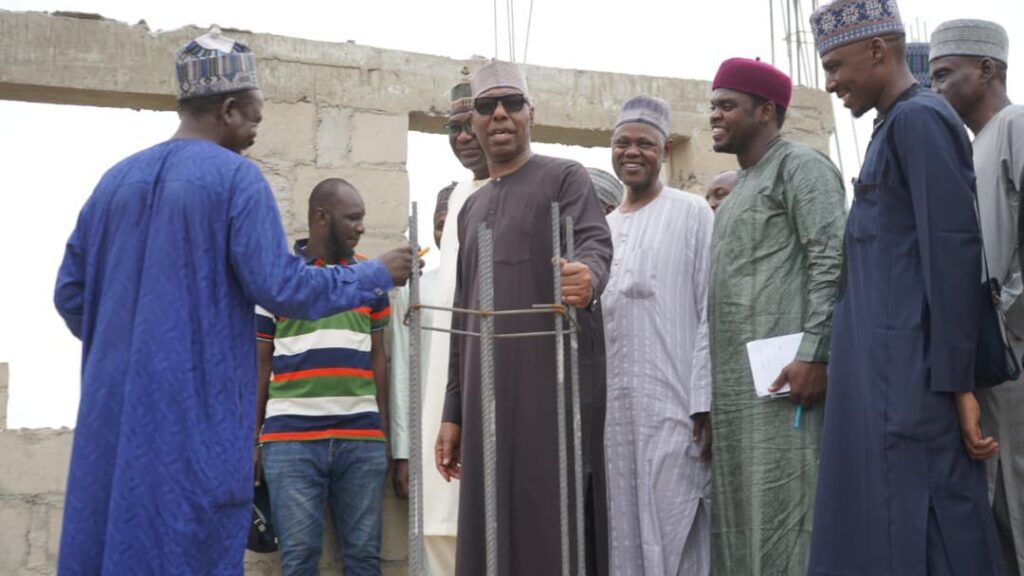
Beyond security discussions, Zulum inspected several key projects in Kukawa Local Government Area aimed at accelerating post-conflict recovery. The projects include a General Hospital, a Mega Primary School, and the High Islamic College.
The High Islamic College is designed to provide educational opportunities for out-of-school children and Almajiri pupils through a curriculum that integrates Islamic and Western education. Graduates will be eligible for admission into universities, polytechnics, and colleges of education nationwide.
The governor also announced plans to support local economic recovery through agriculture. He said farming tools, agricultural implements, and improved seedlings would soon be distributed to farmers, while returnee fishing communities would receive assistance to rebuild their livelihoods.
The planned reopening of the Baga–Chad waterway is part of broader efforts by the Borno State Government to stabilise communities affected by more than a decade of insurgency. It also aligns with ongoing regional initiatives to restore security, encourage resettlement, and revive economic activities across the Lake Chad Basin.
For many residents, reopening the waterway represents more than a transportation project. It is seen as a symbol of recovery and a pathway to renewed prosperity for communities seeking to rebuild after years of conflict and isolation.
