
Health Minister says access to critical care must be based on clinical need, not ability to pay
By Danjuma AMODU
The Federal Government has pledged to strengthen sustainable financing for intensive and critical care services in public hospitals to protect Nigerians from catastrophic health expenditures.
The Minister of State for Health and Social Welfare, Dr. Iziaq Adekunle Salako, made this known on Wednesday at the opening of the 11th Annual Scientific Conference and Annual General Meeting of the Intensive and Critical Care Society of Nigeria (I-CCSN) held at Transcorp Hotel, Abuja.
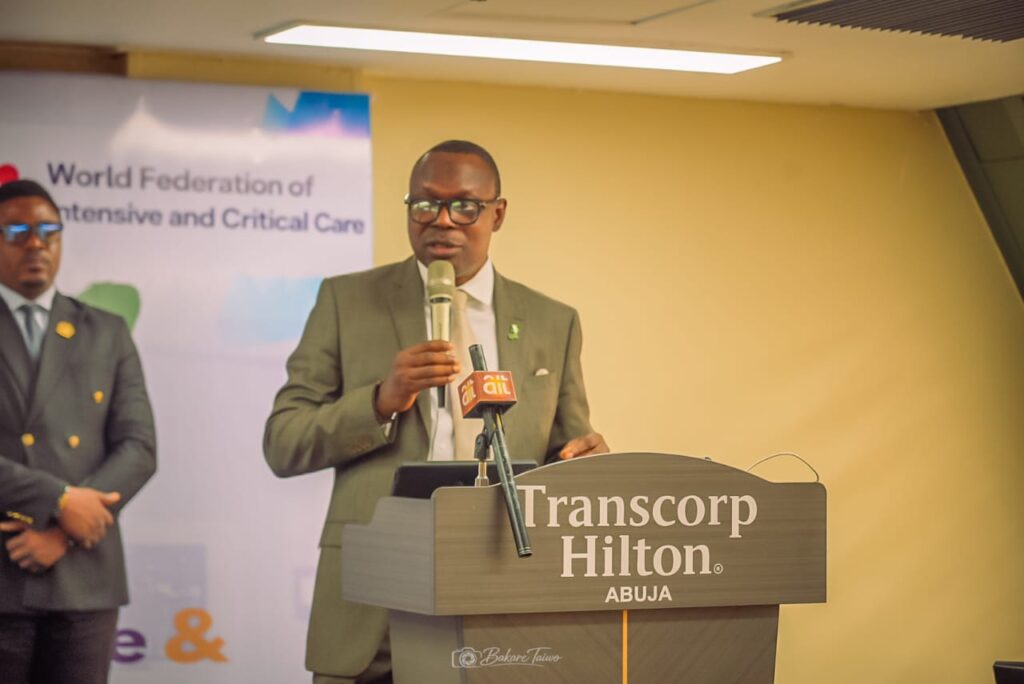
The conference, with the theme “Sustainable Financing for Intensive Care in Public Hospitals in Nigeria”, brought together healthcare professionals, policymakers, researchers, and development partners.
Salako said critical illness could arise from trauma, maternal complications, surgical emergencies, non-communicable diseases, and public health emergencies, and that access to quality intensive care often meant the difference between life and death.
He noted that intensive care is resource-intensive, requiring infrastructure, trained personnel, medical oxygen, ventilators, monitoring systems, and uninterrupted utilities. He added that overreliance on out-of-pocket payment continues to delay treatment and push families into financial hardship.
“No Nigerian family should be forced to choose between financial ruin and access to life-saving healthcare.”
— Dr. Iziaq Adekunle Salako, Minister of State for Health and Social Welfare

The Minister said the National Emergency Medical Service and Ambulance System (NEMSAS) has expanded from the FCT to 34 states, with a digital emergency dispatch system being developed to link callers, ambulances, and treatment centers for real-time response.
He stressed that building a resilient critical care system requires investment in workforce development, medical oxygen plants, referral networks, and regional critical care hubs. He also called for stronger collaboration between government, professional bodies, the private sector, and development partners.
Salako urged the I-CCSN to produce practical and measurable recommendations to guide policy on financing, workforce training, equipment maintenance, and service delivery.
He declared the conference open and reaffirmed the Ministry’s commitment to working with the Society to improve critical care outcomes in Nigeria.
