
By Danjuma Amodu
In Nigeria’s bid to break the grip of transnational drug cartels in West Africa, the Federal Government and Ghana have signed a landmark anti-trafficking pact, pledging joint enforcement, intelligence sharing, and coordinated strikes against criminal networks.
The agreement was sealed on Tuesday in Abuja when the Chairman of the National Drug Law Enforcement Agency , Brig. Gen. Buba Marwa , hosted the Director-General of Ghana’s Narcotics Control Commission , Brig. Gen. Maxwell Obuba Mantey, and his delegation at the NDLEA headquarters.
Marwa said both countries are now “more aligned than ever” in tackling the drug trade, warning that the growing sophistication of traffickers and their links to money laundering demand a unified regional response.
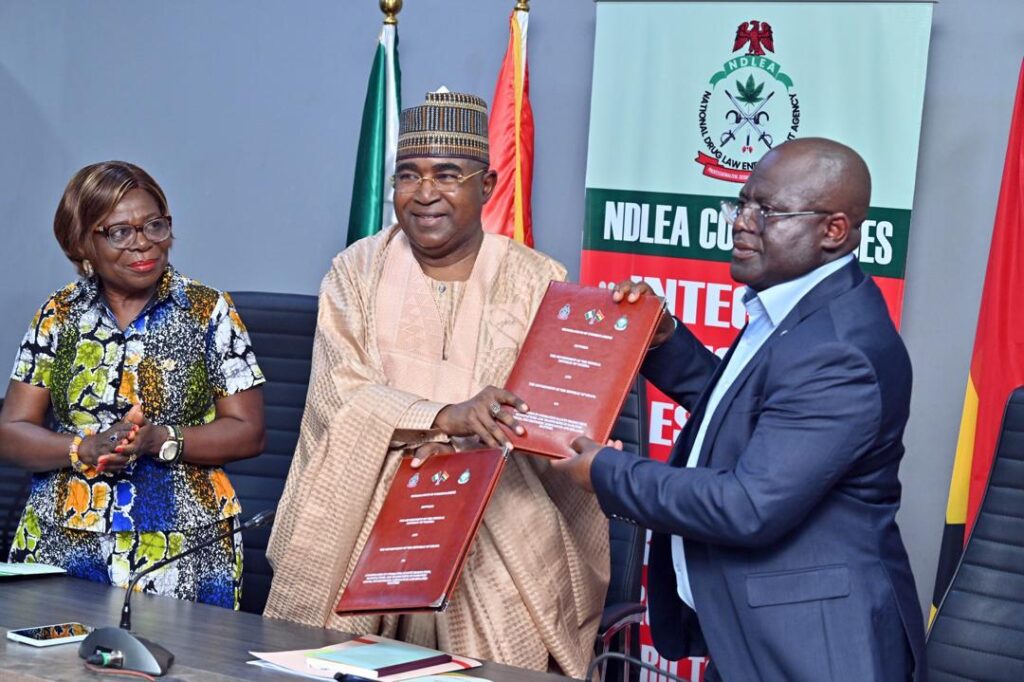
“Let this serve as a warning to those who seek to destabilise our societies with illicit drugs: Nigeria and Ghana stand united,” Marwa declared. “Through joint intelligence-led operations and interdiction strategies, we will significantly shrink the operational space for criminal networks.”
He described the engagement as strategic, not symbolic. The centrepiece was a Memorandum of Understanding that formalises cooperation against the production and trafficking of psychotropic substances, precursor chemicals, and associated financial crimes.
According to Marwa, the MoU converts a historically strong relationship into a “structured, aggressive, and unified front” against drug barons. Under the pact, both agencies will expand joint training, collaborate on digital forensics, and mount coordinated operations across the West African corridor.
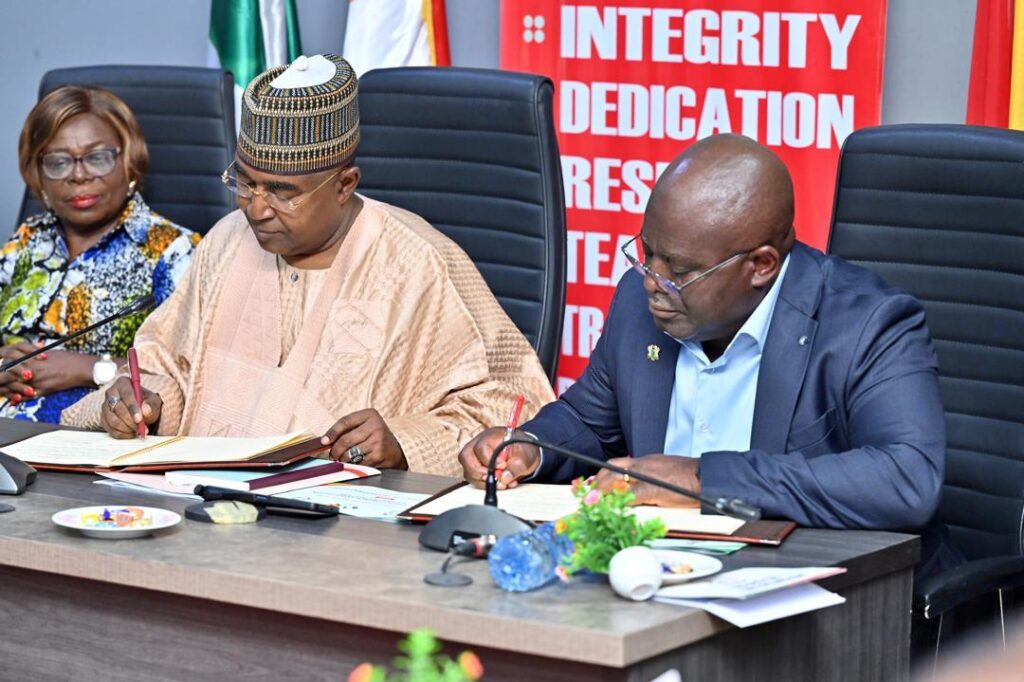
Responding, Mantey commended Nigeria’s leadership in regional security, saying the relationship is built on shared history and mutual respect. He explained that the visit aimed to deepen existing ties rather than create new ones.
He cautioned that drug trafficking in West Africa is evolving fast. Cartels, he said, are using advanced concealment methods, opening new maritime routes, and scaling up the manufacture and distribution of synthetic drugs. Ghana, once seen mainly as a transit point, now faces rising domestic consumption and local distribution networks.
“No single country can effectively address this threat in isolation,” Mantey noted. He called for practical steps on operations, intelligence exchange, and institutional capacity building, stressing that the partnership will be judged by “concrete implementation” and sustained joint enforcement.
Senior officials from both agencies attended the meeting, alongside representatives of the Ghanaian High Commission in Nigeria.
The renewed alliance comes amid mounting concern over the impact of organised drug networks on security, governance, and public health in West Africa. Analysts say the MoU could become a template for broader sub-regional cooperation, especially along key trafficking routes from the Sahel to the Gulf of Guinea.
For Marwa, the message to cartels is unambiguous: “The space to operate is closing. Nigeria and Ghana will not be safe havens for your trade.”
