
By Hassan Hussain
The Executive Director of the African Youths Growth Foundation (AYGF), Dr. Arome Salifu, has cautioned Nigerian youths against allowing themselves to be used as instruments of political violence and thuggery, saying no young person should die pursuing the political ambitions of individuals seeking elective office.
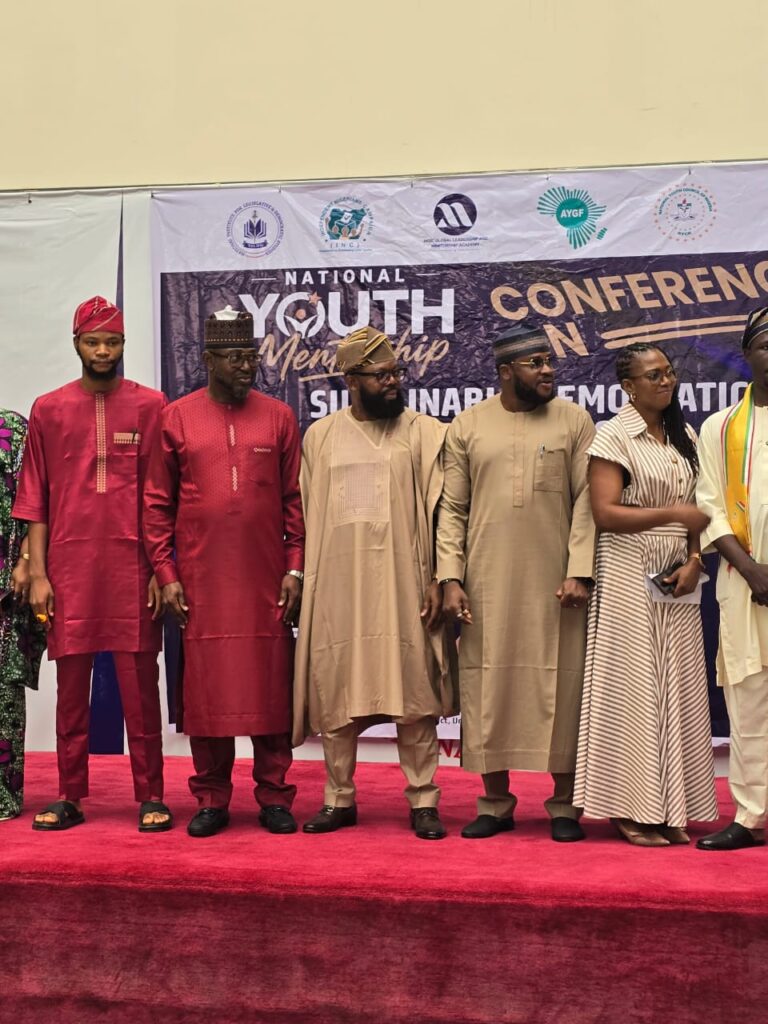
Salifu gave the warning in Abuja at the National Youth Mentorship Conference on Sustainable Democratic Governance, themed “Building Sustainable Pathways for Civic Leadership, Electoral Participation and Democratic Governance.”
He attributed the vulnerability of many young Nigerians to political manipulation driven by poverty, unemployment and underemployment.
“The political class must stop exploiting the economic challenges confronting young people for electoral gains,” he said. “The continued denial of opportunities for young people to become economically empowered has made them susceptible to manipulation by politicians.”
Salifu urged youths to reject offers to participate in political thuggery or any act capable of destabilising the country, especially during elections. He also called on politicians to desist from using poverty and youth vulnerability as tools for mobilisation and violence.
He expressed concern that some of the country’s security challenges could be traced to the historical use of political thugs, noting that such groups often later go beyond the control of their sponsors.
“Political actors must exercise caution in their pursuit of electoral victories and embrace democratic principles and best practices,” he said.
Salifu said youth participation in politics should go beyond election-period mobilisation. He urged young Nigerians to take ownership of the democratic process and contribute ideas that promote national development.
He noted that young people constitute a significant proportion of Nigeria’s population and therefore have the numbers to influence the country’s political direction. He challenged them to demand better policies and leadership in education, healthcare, infrastructure, peace and security.
The AYGF boss, however, cautioned that age alone does not make a good leader.
“Aspiring young leaders must demonstrate good character, competence and capacity, while placing the overall interest of Nigerians above ethnic, religious and other narrow considerations,” he said.
Salifu advocated pan-Nigerian leadership capable of inspiring citizens and creating an environment where young Nigerians would have fewer reasons to seek opportunities abroad.
“Nobody should lose his or her life because of the ambition of a politician seeking to become governor, senator or president,” he said.
He also urged Nigerians, particularly youths, to participate actively in the electoral process in line with democratic best practices and global standards.
Speaking on “Voter Apathy in Nigeria’s Electoral Process: Implications for Democratic Legitimacy,” the Independent National Electoral Commission (INEC) Resident Electoral Commissioner in Plateau State, Mr. Sam Egwu, said youths have a critical role to play in reversing declining voter turnout.
According to him, voter apathy poses a major threat to democratic legitimacy, as governments elected by a small proportion of citizens face questions over the breadth of their mandate.
Mr. Egwu said average voter turnout in Nigeria’s last three electoral cycles remained between 30 and 35 per cent. He urged young Nigerians to express dissatisfaction with poor governance through the ballot rather than by staying away from polling units.
“We need to show our public anger, not by resorting to violence, but by going to the polls to select the people that are popular,” he said.
Also speaking, the Director-General of the National Institute for Legislative and Democratic Studies (NILDS), Prof. Abubakar Sulaiman, said youth inclusion is fundamental to achieving a legitimate and sustainable democracy. He was represented by the Director, Department of Democracy and Governance, Mr. Christopher Ngara.
Prof. Sulaiman identified unemployment, poverty, unequal access to education, weak institutions and limited political financing as major barriers to youth participation in politics.
He said youths are often treated as voters, campaign mobilisers and political foot soldiers, rather than as policymakers, legislators and leaders.
“In some cases, young people are vulnerable to political manipulation and mobilisation for political violence,” he said. “Meaningful youth participation is essential to ensuring the responsiveness, legitimacy and sustainability of Nigeria’s democracy.”
Also, the Founder of The Mande Global Impact Consulting Limited, Mr. Suleiman Mande, said the quality of Nigeria’s democracy depends largely on the character, knowledge and responsibility of its citizens.
He urged young Nigerians to prepare for leadership by becoming informed, responsible and active citizens.
“Before we demand accountability from institutions, we must first ask ourselves: are we accountable ourselves? Are we responsible citizens?” he asked.
He encouraged youths to participate in the electoral process before, during and after elections, ask questions, demand transparency, respect the rule of law and remain actively engaged in governance.
