
By Danjuma Amodu | April 25, 2025
The Federal Ministry of Environment has rolled out a nationwide collection scheme for small-sized waste batteries, warning that improper disposal is poisoning water sources, farmland and children across the country.
The initiative, launched in Abuja on Thursday in partnership with the Alliance for Responsible Battery Recycling (ARBR), will see branded safety receptacles deployed across the Federal Capital Territory to collect AA, AAA, button cells and lithium-ion batteries from phones, toys, torches and remotes.
p
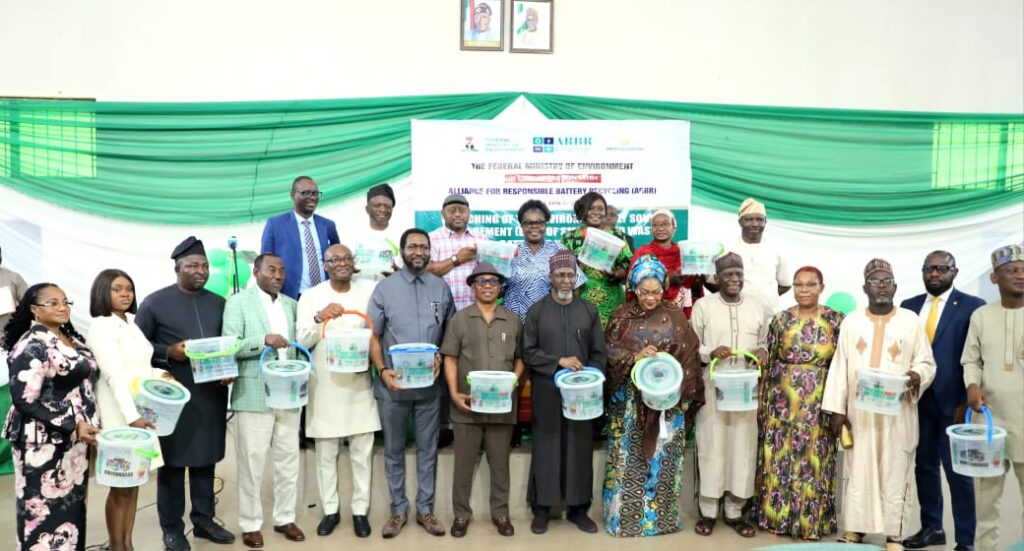
He explained that the scheme will install dedicated safety receptacles across the Federal Capital Territory (FCT) — in market squares, schools, offices, motor parks and other public spaces, to guarantee that small-sized batteries are collected at source and handled in an environmentally-sound way.
A critical gap in recycling
While lead-acid car batteries are routinely recovered by recyclers, small batteries are largely ignored because they offer “no economic value”, the Ministry said.
When batteries are mentioned, most people immediately think of the large lead-acid types used in vehicles. Today, however, attention shifts to a quieter environmental hazard. Small-sized waste batteries include the “button cells” in wristwatches, AA and AAA alkaline batteries in television remotes, and the lithium-ion cells that run smartphones, toys and handheld torches.
“These batteries are small enough to sit forgotten in a drawer and light enough to end up in a household bin. Their size masks the risk, and they are frequently mishandled or dumped by informal recyclers and unregulated operators, creating environmental and health dangers.”
Speaking on the hazards, he noted: “It is worth remembering that small-sized waste batteries contain heavy metals such as lead, mercury, cadmium and lithium.”
“Once they reach dumpsites or landfills, the casings break down and release their contents. The heavy metals then seep into groundwater and soil.”

“From there they move into the food chain, polluting drinking water and food crops. The result is irreversible neurological damage, stunted growth in children, kidney failure, respiratory illness, cancer, and brain damage that can alter behaviour — and in many cases, especially among children, it leads to death.”
How the new system will work
The project creates a centralised collection system under Nigeria’s Extended Producer Responsibility (EPR) framework. Receptacles will be placed in market squares, schools, offices, motor parks and other public spaces to capture batteries at source.
“Collection is the foundation of Environmentally Sound Management,” said ARBR, the government-recognised Producer Responsibility Organisation for the battery sector. “Without effective collection, the entire chain, Collection, Transport, Storage, Treatment, Recycling or Disposal — breaks down.”
ARBR will work with the Abuja Environmental Protection Board (AEPB) and the Waste Pickers Association of Nigeria (WAPAN) to evacuate batteries from receptacles to central aggregation hubs. From there, they will be moved to licensed recycling facilities or for approved export under national regulations.
“This shows how inclusive partnerships can strengthen national systems by integrating informal sector actors into formal waste management,” ARBR added.
Policy and circular economy
The scheme is anchored on the National Policy on Waste Battery Management 2022, its Guidelines and Standard Operating Procedures, and the National Environmental (Battery Control) Regulations 2024. The Ministry said it supports Nigeria’s circular economy agenda by promoting resource recovery, cutting pollution and creating value across the battery value chain.
A call to action
Lawal stated: “It is on this basis that I am pleased to unveil these receptacles for the environmentally-sound management of small-sized batteries in Nigeria.”
“I want to specially appreciate ARBR for partnering with the Ministry on this commendable initiative. I also welcome all participants, particularly our valued stakeholders who have walked this journey with us, for making time to attend today’s launch.”
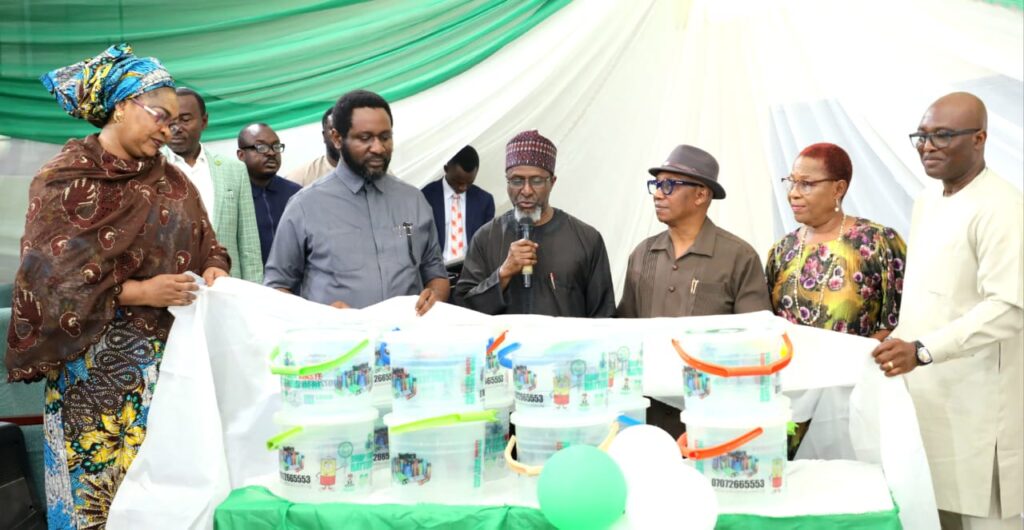
“I urge fellow Nigerians to recognise that every small-sized battery placed in a designated receptacle is a child spared from lead poisoning and a waterway protected from chemical pollution.”
The Minister charged the media to amplify the message and spark a nationwide shift in how waste batteries are managed.
Lawal stressed that, FCT will serve as the pilot, with nationwide rollout planned once the collection and evacuation model is proven.
