
By Henry Ihimekpen
The Southern African Development Community (SADC), the Government of China, UNAIDS and the Global Health Innovation Institute (GHII) have agreed to advance regional pharmaceutical manufacturing as part of efforts to reduce dependence on imported medicines and strengthen health security across Southern Africa.
The agreement followed a joint assessment of pharmaceutical and vaccine production facilities in Johannesburg, Durban and Cape Town, South Africa, where the partners reviewed existing capabilities in biotechnology, genomics, diagnostics and the manufacture of quality-assured health products.
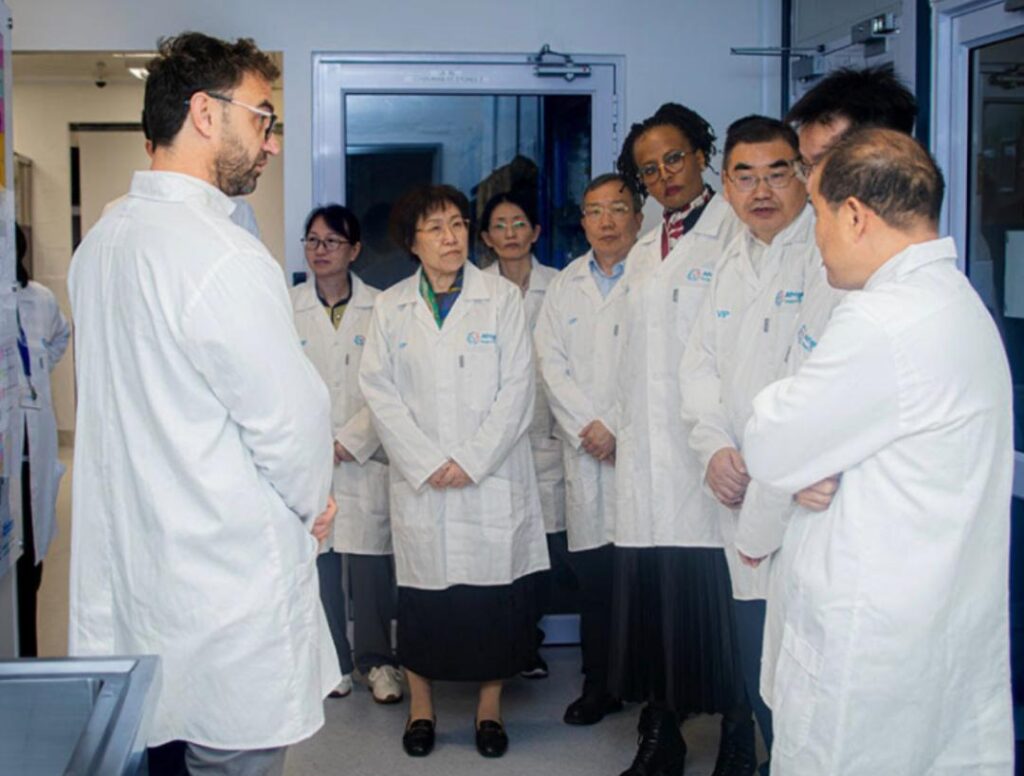
The exchange, which took place amid renewed international calls for stronger South-South cooperation, identified opportunities to connect Southern Africa’s growing manufacturing capacity with Chinese technology, expertise, investment and industrial capabilities.
The partners said the collaboration would support more timely access to essential medicines and health technologies, while helping countries build resilient health systems capable of responding to public health threats and reducing vulnerabilities associated with international supply disruptions.
“This exchange was about moving from ambition to practical action,” said Eva Kiwango, Director and Representative, UNAIDS Office in China.
Kiwango said SADC had the capacity to expand regional manufacturing and improve access to essential HIV and other health products, but stressed that sustained investment, regulatory alignment, technology transfer, skills development, strategic multilateral partnerships and innovative financing would be required to translate that potential into production.
The collaboration aligns with the United Nations’ Political Declaration on HIV/AIDS, which calls for greater health sovereignty and strengthened cooperation to advance local and regional production of HIV and other health technologies as part of efforts to end AIDS as a public health threat by 2030.
It also comes at a time when countries are seeking to strengthen domestic and regional supply chains for essential health products, particularly in sub-Saharan Africa, where access to medicines remains closely linked to manufacturing capacity, financing and procurement systems.
An official of China’s National Disease Control and Prevention Administration (NDCPA) said the exchange had strengthened mutual understanding and identified practical opportunities for cooperation between China and Southern Africa.
“By leveraging complementary strengths in policy, technology, manufacturing and market development, we can advance local pharmaceutical production, enhance health security, and support sustainable access to quality health products across the region,” the official said.
Among the priorities identified were the development of a regional list of essential HIV and sexual and reproductive health commodities, improved demand forecasting, pooled procurement and the creation of more predictable markets for African manufacturers.
The partners also agreed to advance technology transfer, skills development and investment opportunities to expand local pharmaceutical production, while supporting regulatory systems capable of ensuring that medicines manufactured in the region meet quality standards.
For UNAIDS, the initiative is particularly significant given the continuing treatment gap in sub-Saharan Africa.
More than half of the people living with HIV who are not receiving lifesaving antiretroviral treatment are in the region, underscoring the importance of reliable access to medicines and the need to ensure that advances in pharmaceutical innovation translate into products that are available to those who need them.
The Chief Executive Officer of Desano Pharmaceutical Group, Ms Xiaoxia An, said the visit had highlighted opportunities for China-Southern Africa cooperation in pharmaceutical development.
“By combining our respective strengths in manufacturing, innovation, and market development, we can support strengthening local production capacity, improve access to quality medicines, and contribute to better health outcomes for people across Southern Africa,” she said.
The partners’ focus on regional demand, pooled procurement and regulatory cooperation suggests that the initiative is intended not only to expand production but also to create the market conditions needed to sustain local pharmaceutical manufacturing.
For Southern Africa, the proposed collaboration offers a pathway towards stronger regional production of essential medicines and health technologies, while for China, it provides an opportunity to deepen cooperation through technology, investment and manufacturing partnerships.
The initiative is expected to build on the capabilities assessed during the facility visits and advance discussions on practical mechanisms for turning the identified opportunities into sustained regional production and improved access to essential health products.
